

10.92°F cooler
Run cool under the sun
Average temperature drop versus traditional EPS foam helmets — measured in identical climate conditions.
Heat doesn’t just feel uncomfortable — it costs you hours, focus, and money.
Caco America’s Performance Safety Helmets run an average of 10.92 °F cooler than traditional EPS-foam helmets, engineered with Koroyd® cross-ventilation to keep field crews sharp, safe and on schedule.
ReducingHeat Stress.
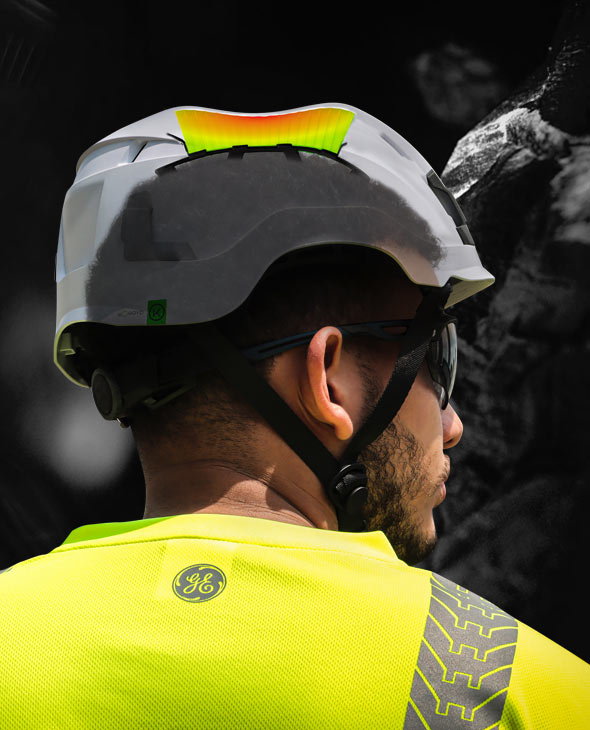
Where EPS foam densifies and traps heat, Koroyd is 95% air — a welded matrix of micro-tubes that vents heat continuously while absorbing impact at a constant rate. Same shell. Radically different physics.
Every spec on this page is independently tested. No marketing softening. The numbers that follow are the difference between a crew finishing the shift fresh and a crew slowing down by 3:00 PM.
Average temperature drop versus traditional EPS foam helmets — measured in identical climate conditions.
Koroyd® absorbs energy at a constant rate across its tubular structure — including angled impacts EPS struggles with.
The Koroyd core is 95% air. Hot air rises out instead of being trapped against the scalp like in EPS foam.

Koroyd® is an advanced impact technology built from welded tubes. On impact, the tubes crumple instead of springing back — absorbing energy through sacrificial plastic deformation rather than transferring it to the head. The same open-cell architecture that absorbs energy also lets hot air vent freely, so protection and breathability are engineered together.
An engineered core of welded tubes, built to perform in the toughest environments.
On impact, the tubes crumple on a constant rate in difference to the eps foam and use up to 78% of its material to absorb the impact vs the eps foam that only uses 60%.
Instead of springing back like traditional foams — helps reduce both direct acceleration and the rotational motion linked to head injury.
Open-cell architecture lets hot air escape from the wearer’s head by letting cool air in across the full surface of the core, delivering ventilation without compromising protection.
·
welded tube matrix
95% air
Pull the climate, crew size and wage levers. The model returns approximate productivity loss and the dollars you reclaim by switching to a cooler helmet system. Built by Caco America on top of peer-reviewed heat-stress research.
Everything you need to brief safety officers, project managers and procurement teams. Independent thermal data, impact testing methodology and the heat-stress economics behind the calculator.

The full thermal study: methodology, climate chamber data, and field measurements against EPS-foam baselines.
Download study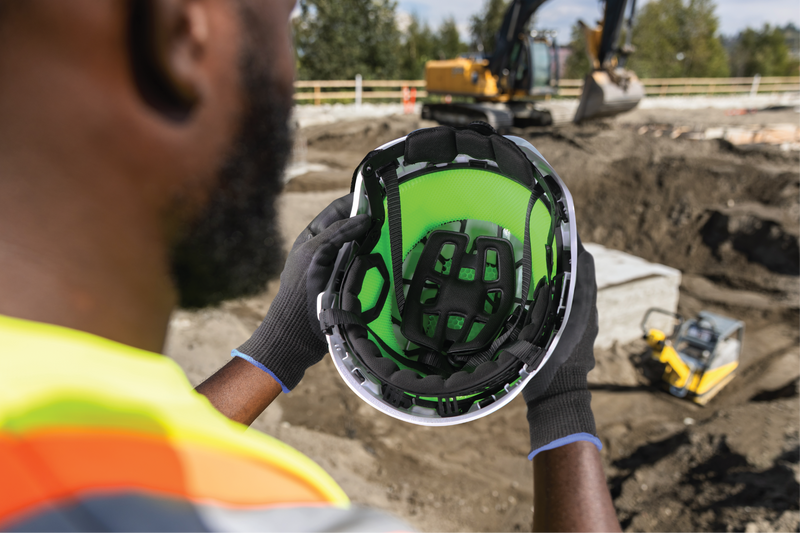
Walks through the productivity model that powers our calculator — wage levers, climate variables, real-world inputs.
Download model
Side-by-side analysis of impact absorption, end-of-life detection, ventilation and lifecycle hygiene.
Download comparisonExplore the full GH-Line — Type 1 and Type 2, vented and non-vented, plus the accessories that complete the system.
Help us put the conversation about heat stress where it belongs — on the job site, in the safety briefing, in the procurement spec. Share what you’re seeing and tag us.


