


PPE Buying Guide: Types, Requirements and Standards
How to choose personal protective equipment by hazard: the seven categories, the ANSI standard that governs each one, and how to run the hazard assessment OSHA asks to see in writing.
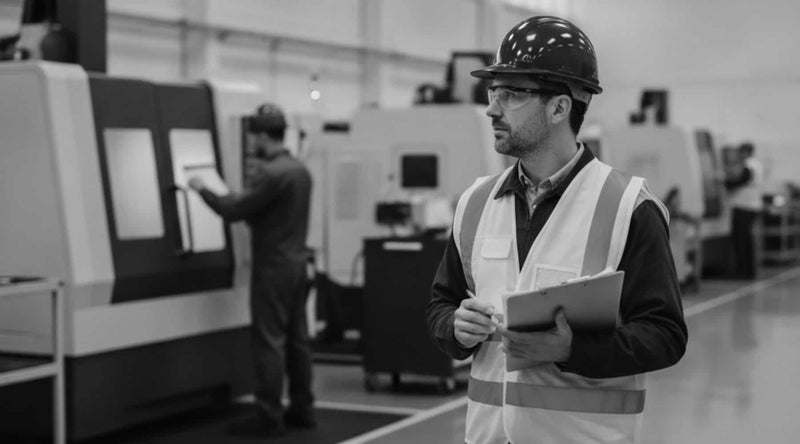
Personal protective equipment is the last line of defense on a job site. It works only when the right gear reaches the right worker at the right rating, and most PPE budgets leak because that last part goes wrong.
This guide covers the seven categories of PPE, the standard that governs each one, and how to decide what your crew actually needs. It is written for safety managers, foremen and purchasing leads specifying a program, not for someone buying one pair of gloves. If you already know what you need, shop by category or request bulk pricing.
Section 1
The Seven Types of PPE
PPE is grouped by the part of the body it protects. Each group has its own governing standard, and each standard uses its own rating scale. Getting the category right is easy. Getting the rating right inside it is where programs fail.

Head Protection
Split into Type 1 for top impact and Type 2 for top and lateral impact, then into Class G, Class E and Class C for electrical protection. Type 2 matters wherever workers are at height or near moving plant.
Shop hard hats and safety helmets
Eye and Face Protection
A Z87 marking means basic impact. Z87+ means high impact, which is what grinding, cutting and chipping require. Additional markings cover splash, dust and UV.
Shop safety glasses, goggles and face shields
Hearing Protection
Protectors must be made available once workers reach an eight-hour average of 85 decibels, and worn above the 90 decibel exposure limit. Plugs rate higher than muffs, but muffs get worn more consistently.
Shop ear plugs and ear muffs
Hand Protection
Two separate standards apply. ANSI/ISEA 105, currently the 2024 revision, rates cut resistance from A1 to A9. ANSI/ISEA 138 rates back-of-hand impact from 1 to 3. A glove can carry both, and many jobs need both.
Shop cut resistant, impact and welding gloves
Protective Clothing and Hi-Vis
High visibility apparel is graded Class 1, 2 and 3 by how much fluorescent and reflective material the garment carries. Disposable coveralls are classified by Type, with Type 5/6 covering particle and light splash.
Shop hi-vis vests, shirts and coveralls
Ergonomic Support
Knee pads and back support belts reduce cumulative strain rather than acute injury. That makes them easy to leave out of a program, and expensive to leave out over a decade.
Shop knee pads and back support beltsRespiratory and Foot Protection
Respirators require fit testing and a written respiratory protection program. Safety footwear is governed by ASTM F2413. Caco America does not currently stock either category. We name them because a complete assessment has to account for them, and you will need a separate source.
Not stocked by Caco AmericaSection 2
Start With a Hazard Assessment, Not a Catalog
OSHA requires employers to assess the workplace for hazards that make PPE necessary, and to verify that assessment with a written certification. The certification has to identify the workplace evaluated, the person certifying it, and the date. This is the step most programs skip, and it is the first thing an inspector asks for.
It is also the right way to choose gear. Walk the site and record five things for each task.
- 1
The hazard
Impact, cut, abrasion, chemical, heat, noise, electrical, visibility, or a combination.
- 2
Where it acts
Head, eyes, ears, hands, body. This maps straight onto the seven categories above.
- 3
The severity
What happens on a bad day, not an average one. This sets the rating you buy.
- 4
The frequency
Constant exposure justifies comfort features that occasional exposure does not.
- 5
The environment
Heat, humidity, confined space and tool interaction all change what actually gets worn.
Then pick the lowest rating that covers the hazard. This is the part people get backwards. A worker in A9 gloves doing fine assembly will take them off, and a glove in a pocket protects nobody. Over-specifying is not a safe margin. It is a compliance failure with a higher invoice attached.
Reassess when a process changes, when new equipment arrives, and after any incident. A hazard assessment written once and filed is worth very little.
Section 3
What OSHA Requires of Employers
The general PPE standard is 29 CFR 1910.132. Four obligations sit inside it, and they catch most employers out in the same order.
Assess and certify
Evaluate the workplace for hazards requiring PPE and document the assessment in writing.
Select and provide
Choose PPE that fits the hazard and fits the worker. Fit is part of the requirement, not a comfort extra, and it is a common finding where one glove or vest size is issued to a mixed crew.
Pay for it
Employers are generally required to provide PPE at no cost. Limited exceptions exist, including non-specialty safety-toe footwear and non-specialty prescription safety eyewear workers may take off site.
Train
Workers must be trained on when PPE is necessary and which PPE is required. Training also covers how to put it on and take it off, its limitations, and how to care for it.
Noise sits under a separate standard, 1910.95, which triggers a hearing conservation program at an eight-hour average exposure of 85 decibels.
None of this requires a consultant. It requires a walk-through, a written record, and a supplier who can hold consistent stock against what you specify.
Section 4
PPE Standards at a Glance
One table covering every rating scale referenced above.
| Standard | Covers | Rating scale |
|---|---|---|
| ANSI/ISEA Z89.1 | Head protection | Type 1 and 2 · Class G, E, C |
| ANSI Z87.1 | Eye and face protection | Z87 basic impact · Z87+ high impact |
| ANSI/ISEA 105 | Cut resistance | A1 to A9, measured in grams |
| ANSI/ISEA 138 | Back-of-hand impact | Level 1 to 3 |
| ANSI/ISEA 107 | High visibility apparel | Class 1, 2 and 3 |
| NRR under OSHA 1910.95 | Hearing protection | Decibel attenuation |
| EN ISO 13982 / 13034 | Disposable coveralls | Type 5 particle · Type 6 light splash |
| NIOSH 42 CFR 84 | Respirators | Not stocked by Caco America |
| ASTM F2413 | Safety footwear | Not stocked by Caco America |
Section 5
PPE Checklists by Industry
Starting points, not substitutes for your own assessment. Each links to a full head-to-toe spec.
Construction
Type 2 helmet with chin strap, Z87+ safety glasses, ANSI 107 Class 2 hi-vis, A3 to A5 cut gloves, hearing protection where plant is running.
PPE for constructionWarehousing
Type 1 helmet or bump cap, Z87 glasses, Class 2 hi-vis for forklift traffic, A3 cut gloves, back support belts for pick and pack.
PPE for warehousingManufacturing
Z87+ eyewear, A4 to A6 cut gloves, 26 to 27 NRR hearing protection, Type 5/6 coveralls where dust or spray is present.
PPE for manufacturingOil, Gas and Mining
Type 2 Class E helmet, impact gloves with TPR back-of-hand protection alongside a cut rating, flame resistant clothing, Class 2 or 3 hi-vis.
PPE for miningTransportation
Class 2 hi-vis minimum, Class 3 for yard work at night, A3 cut gloves, safety glasses for load securing.
PPE for transportationCut levels named here fall within the A3 to A7 range Caco America stocks. Your own hazard assessment may call for a different level, including one we would need to source for you.
Section 6
Building a PPE Kit for a New Hire
Most sites issue PPE piece by piece, which means a new starter waits on four separate approvals and works their first shift short of something. A kit fixes that. One SKU, one approval, one handover.
Two rules make kits work. Standardize the ratings across the site so anyone can hand one out without checking a spec sheet. And separate the consumables, because gloves, ear plugs and safety glasses will be replaced many times before the helmet is.
We build ready-to-work PPE kits to a fixed spec, and we will build a custom kit against your SKU list for recurring orders. Kits are available as single units and at case pricing.

A general construction kit
- Hard hat or safety helmet, Type 1 or 2 to your site standard
- ANSI Z87.1 safety glasses
- Cut gloves at the site's standard level
- Hi-vis vest at the class your site requires
- Hearing protection, plugs or muffs
- Knee pads for floor trades
- Back support belt for material handling
Common questions
PPE Requirements, Answered
What are the categories of PPE?
Head, eye and face, hearing, hand, body and high visibility, ergonomic support, respiratory, and foot protection. Each has its own governing standard and its own rating scale.
What does OSHA require for PPE?
A written hazard assessment, PPE selected to fit the hazard and the worker, employer payment in most cases, and documented training on use, limitations and care.
Does the employer have to pay for PPE?
In most cases yes. Limited exceptions include non-specialty safety-toe footwear and non-specialty prescription safety eyewear that workers may take off site.
What is a PPE hazard assessment?
A documented walk-through recording the hazards present, the body part at risk, the severity and the frequency. It determines the rating you buy, and OSHA requires it in writing.
How do I choose the right rating?
Pick the lowest rating that covers the hazard. Over-specifying makes gear uncomfortable, and uncomfortable gear comes off. A glove in a pocket protects nobody.
What should a basic PPE kit contain?
Head protection, safety glasses, gloves at your site's standard cut level, hi-vis at the required class, and hearing protection. Add knee pads and back support by trade.
Know what you need?
Shop by category below, or send us your SKU list and headcount and we will quote volume breaks inside one business day.
Shop PPE by Category
Every category above, in stock and ready to quote. Single units at everyday pricing, case and pallet quantities on request.


