Distributors help industrial clients build a safety culture by treating every order as a program, not a purchase: gear workers actually wear, scheduled replacement, training support, new-hire kits, and data that feeds the client's safety metrics. That arc, from first order to embedded partner, makes a supplier part of the client's safety management system, the hardest position for a competitor to attack.
I have spent more than 30 years in the business behind CACO America, starting when I joined our family company in 1992, and the pattern has never changed. Clients who buy boxes of gear shop on price. Clients who buy a safety culture stay for decades. This playbook moves them from the first group to the second, one relationship stage at a time, in the vocabulary safety managers actually use, from near-miss reporting to leading indicators.
Stage One: The First Order Is a Culture Test
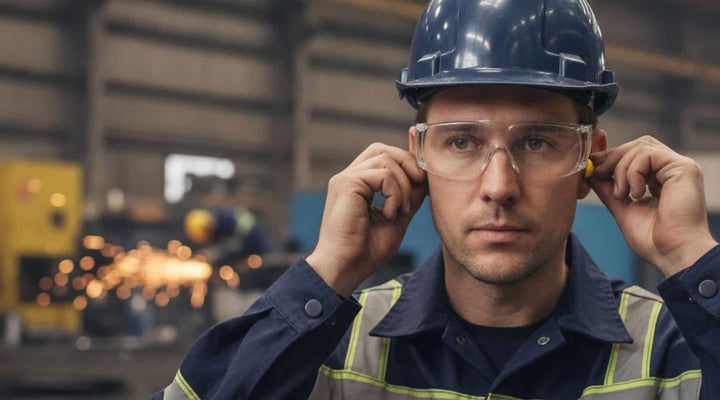
The first order tells a client's workers everything about how seriously management takes safety culture in industrial settings. Gloves that fit, eyewear that does not fog, and safety helmets that stay comfortable through a ten-hour shift get worn. Gear that fails those tests ends up in lockers, and unworn PPE protects nobody. This is where a distributor earns the right to a second conversation: recommend hand protection by task, not by price column, and ask about fit before quantity.
Safety researchers call the snapshot version safety climate: what workers believe management prioritizes right now, versus safety culture, the values that take years to set. Climate moves in weeks, and a good first order moves it faster than any poster campaign.
Fit is now regulation, not preference. OSHA's general industry standard, 29 CFR 1910.132, requires employers to select PPE that properly fits each affected employee, and a December 12, 2024 final rule wrote the same fit requirement into the construction standard at 1926.95(c). A distributor who sizes crews, stocks women's cuts, and swaps what does not fit is doing compliance work the client would otherwise miss. We cover the wider regulatory picture in our guide to OSHA safety compliance standards.
Stage Two: From Orders to a Program
Once the gear is being worn, the conversation should move to the client's workplace safety programs. OSHA's Recommended Practices for Safety and Health Programs rest on seven core elements: management leadership, worker participation, hazard identification and assessment, hazard prevention and control, education and training, program evaluation and improvement, and communication and coordination for host employers, contractors, and staffing agencies. A distributor cannot own any of them. A good one can feed at least five.

Safety leadership is the base of that pyramid. Management commitment is measured in what leadership spends money and meeting time on, and visible spending on proper gear is the cheapest leadership signal a client can send. A plant manager who hands out well-fitted gear personally sets the tone faster than any policy binder.
Hazard identification is where a distributor earns technical credibility. Help the safety manager document the hazard assessment that 1910.132(d) requires, walk the floor for risk assessments before quoting, and support Job Safety Analysis (JSA), which breaks one job into steps and matches each step to a hazard and a control. Then map every hazard to equipment, from hearing protection for grinder bays to ergonomics supports for repetitive-lift stations.
Education and training is where toolbox talks earn their keep. A toolbox talk is a short crew huddle on one specific hazard, held at the job face rather than in a classroom. Talks fail for a boring reason: supervisors run out of fresh material. So bring a talk sheet with every delivery, glove cut ratings one week, earplug insertion the next. Tie each talk to the gear coming off your truck and the communication system starts to run itself.
Worker participation is the element most programs fake with a suggestion box. Real worker engagement means wear trials, where crews test candidate gloves or eyewear and their verdict decides the order. Employee empowerment lives in two structures a distributor can supply: safety committees, which need product data and samples for their monthly agenda, and stop-work authority, the explicit right of any worker to halt an unsafe task without permission and without fear of discipline.
Some clients formalize participation into Behavior-Based Safety (BBS): trained workers observe a task, record safe and at-risk behaviors against a checklist, and give immediate peer feedback. PPE use is nearly always an observation category, and the distributor who reads those summaries learns which products fail in the field before purchasing does.
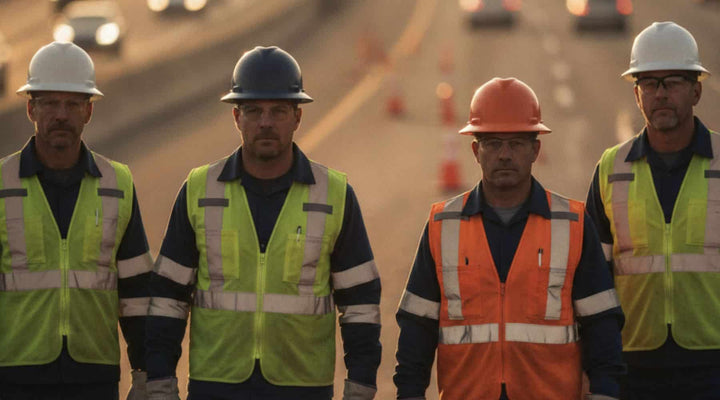
The seventh element is contractor safety: host employers coordinate with contractors and staffing agencies so everyone on site works to one standard. Mismatched gear is the visible symptom when they do not. Supplying the client's contractors to the same spec closes that gap and usually opens a second account.
Replacement cadence matters just as much. Faded hi-vis and scratched lenses signal that safety is negotiable. A standing replacement schedule signals the opposite, and it is a service a catalog cannot copy. Run it well and it trims waste and overstock too, as we show in sustainable safety gear inventory.
The Relationship Map: Stage by Stage

Read the third column twice. The culture signal, not the product, is what the client is actually buying.
| Partnership Stage | What the Distributor Provides | Culture Signal It Creates |
|---|---|---|
| First Order | Task-matched, fit-checked gear; sizing sessions on site | "Management buys equipment we will actually wear." |
| Program Building | Toolbox-talk sheets, wear trials, JSA and hazard-assessment support, replacement cadence | "Safety here is a system, not a slogan." |
| Embedded Partner | Standing orders, stocked new-hire kits, near-miss and observation data routed into the catalog | "Day one, you get real gear, and your opinion changes what we buy." |
| Renewal and Referral | Annual program review, leading-indicator reports, early access to improved equipment | "Our supplier is part of our safety team." |
Stage Three: Becoming Embedded

The embedded stage has three markers. First, standing orders: consumables like gloves and earplugs arrive on schedule without a purchase-order scramble. Second, new-hire kits: every worker's first day starts with a complete, sized set built from safety kits, which tells them the culture before anyone says a word. Third, and most overlooked, a feedback loop. When a welder says her gloves wear through at the thumb in a week, that comment should reach the distributor and change the next order.
The feedback loop deserves a system. Ask the client to route three streams your way: worker comments on gear, safety observations from BBS rounds or committee walk-throughs, and near-miss reports, the incidents that hurt nobody but almost did. Near-miss reporting is the cheapest early warning a plant has; a rising report count usually means workers trust the system, not that the site got more dangerous. A near miss that mentions a fogged lens or a torn glove is a product decision waiting for you.

Leading Indicators vs Lagging Indicators
Safety metrics split into two families. Lagging indicators count what already went wrong: recordable injuries, lost-time cases, workers' compensation claims. OSHA describes leading indicators as proactive, preventive measures that show whether safety activities are working before anyone gets hurt. Practical examples: near misses reported, safety observations completed, training attendance, and PPE replaced on schedule instead of after failure.
Here is the angle most distributors miss. Your data is a leading-indicator feed. Order history shows whether replacement cadence is holding. Fit-session records double as training completion evidence. Kit fulfillment proves day-one coverage for every new hire. Hand the safety manager a quarterly export and you are no longer a vendor. You are an instrument in the program.
When Something Goes Wrong: Investigations and Corrective Actions
Even strong programs have incidents, and incident investigations are where a culture shows its spine. Blame-first investigations produce silence. A proper root cause analysis asks why the failure made sense to the people involved: why the guard was off, why the wrong glove was on the bench, why the schedule rewarded the shortcut. The output is a list of corrective actions with owners and due dates, not a memo.
A distributor supports this quietly. Purchase records establish what gear was on site and when it was last replaced. When the corrective action is an equipment change, an upgraded cut level, or a switch to an anti-fog lens spec, you execute it, then verify it held at the next review. Closing that loop is continuous improvement in its plainest form.
The Bureau of Labor Statistics recorded 5,070 fatal work injuries in 2024, one worker every 104 minutes, and private industry employers logged 2.5 million nonfatal injuries and illnesses the same year. Keeping those numbers in front of a client reinforces why the program exists.
Stage Four: What the Distributor Gains
Selling a safety culture is not charity. It is the strongest commercial position in industrial distribution. Retention improves because switching suppliers now means dismantling a program, not just changing a vendor. Share of wallet grows because the partner who supplies protective eyewear and runs the new-hire kit is the natural first call for everything else. Referrals follow because safety managers talk, and the distributor who helped one plant pass its audit meets the sister facility.
The annual program review locks it in. That review is the client's program evaluation and improvement element, run on your data: replacement compliance, wear-trial results, near-miss themes, and what to upgrade next. The equipment side keeps moving too, as our review of industrial safety equipment trends for 2026 shows, and the partner in the room when priorities get set supplies what comes next.
The economics work for the client as well. The National Safety Council put the total cost of work injuries at $181.4 billion in 2024, or $1,120 per worker, with a single medically consulted injury averaging $48,000. Against numbers like that, a distributor-run program is inexpensive insurance.

What 30 Years of Partnerships Taught Me
Our company holds the exclusive GE PPE license across the Americas and the Caribbean, and the first license for WD-40 microfiber towels. Those agreements exist because brands watched how we treat partners over decades, not quarters. We sell into 38+ countries today, and the accounts that anchor the business are the ones where we stopped being a vendor years ago.
"I have watched purchase orders come and go since 1992. The clients who stayed were never the ones who bought the cheapest gloves. They were the ones whose crews we knew by name."
Distributors ask me how to defend margin against online catalogs. The answer is in this playbook. A catalog can match your price. It cannot run a fitting session, hand a supervisor next week's toolbox talk, or notice that the night shift stopped wearing its earplugs.
FAQ
1. What is an industrial safety culture?
An industrial safety culture is the set of shared habits and expectations that determine how people actually behave around hazards when nobody is watching. Equipment, training, and replacement routines are its visible evidence. OSHA's recommended practices frame it through management leadership, worker participation, and ongoing hazard control rather than rules alone.
2. How can a distributor support workplace safety programs without being a consultant?
Stay inside your lane: gear selection matched to the client's own hazard assessment, fit sessions, wear trials, toolbox-talk material tied to the products you supply, and replacement schedules. You are supplying the program's raw material and rhythm. The client's safety manager still owns policy, discipline, and recordkeeping.
3. What are leading and lagging safety indicators?
Lagging indicators count past harm: injury rates, lost workdays, and claims. Leading indicators are proactive measures that show whether prevention is working, such as near misses reported, safety observations completed, training attendance, and on-schedule PPE replacement. OSHA recommends tracking both families together.
4. What is stop-work authority?
Stop-work authority is the explicit right of any worker to pause a task they believe is unsafe, without asking permission and without punishment. It only works when management publicly backs the first workers who use it. Gear plays a supporting role: crews who trust their equipment and training tend to flag unsafe conditions earlier.
5. What belongs in a new-hire PPE kit?
Match the kit to the site's hazard assessment. A typical industrial kit covers head, eye, hand, and hearing protection plus hi-vis, all in the worker's actual sizes. Prebuilt safety kits are a starting point that the distributor then tailors per role.
6. How does safety management for distributors differ from selling products?
Product selling ends at delivery. Safety management for distributors means owning what happens after: tracking replacement cycles, routing worker feedback and near-miss themes into the catalog, supporting incident investigations with purchase records, and reviewing the program annually. The revenue looks similar on an invoice. The retention does not.
Bring the Playbook to Your Line Card
If you distribute to industrial accounts and want a partner who thinks in programs, not pallets, talk to us. CACO America supplies distributor partners with the full range, from GE PPE to hi-vis products, plus the sizing, cadence, and support material this playbook describes. Reach out through cacoamerica.com and ask for a distributor program review.