The most in-demand safety products for 2026 are cut and impact gloves, ANSI-rated hard hats, earmuffs and hearing protection, hi-vis apparel, and safety eyewear. Demand is climbing because buyers now purchase against specific standards, not general descriptions. Distributors who stock the right ratings, sizes, and bundles win the reorders.
I have spent more than thirty years in this business, joining the family company in 1992 and building it into a distribution operation that now reaches more than thirty-eight countries. When Caco Abbo Group secured the exclusive General Electric (GE) PPE license across the Americas and the Caribbean, the pattern became obvious fast. The accounts that grow are the ones stocked to answer a buyer's next question before they ask it. These five categories are where that question comes up most often.
1. Cut and impact safety gloves
Hand protection leads the list because buyers stopped ordering "work gloves" and started ordering by rating. The ANSI/ISEA 105 cut scale runs from A1 through A9, and ANSI/ISEA 138 grades back-of-hand impact from 1 to 3. A purchasing manager handling glass, sheet metal, or demolition now specifies a level, and a vague product name loses the order.
How to stock it: carry the full cut range, not just the middle. Glass and metal fabrication buyers reach for A4 through A6, while general assembly stays at A2 or A3. Keep sizes from small through 2XL in each rating, since a single size no longer covers a mixed crew. Bundle cut-resistant and impact lines together for oil, gas, and heavy construction accounts, and label every SKU with its ANSI level so buyers can self-select.
2. ANSI-rated safety helmets and hard hats
Head protection demand is being pushed by both regulation and design. OSHA requires head protection that meets ANSI/ISEA Z89.1 under 29 CFR 1910.135 for general industry and 1926.100 for construction. The standard splits helmets into Type I for top impact and Type II for top plus lateral impact, then adds electrical classes: Class G tested at 2,200 volts, Class E at 20,000 volts, and Class C with no electrical protection. Between 2021 and 2022, workers reported 195,720 head injuries, and 684 died from intracranial injuries in 2022.
How to stock it: carry both Type I and Type II, because a buyer who wants side-impact protection will not accept a top-only helmet. Stock all three electrical classes, since a utility account needs Class E and a welder often needs Class C. Vented, cooling helmets move well in hot verticals. Feature your safety helmets and traditional hard hats side by side, labeled by type and class, so a safety manager can match hazard to helmet in one pass.
3. Earmuffs and hearing protection
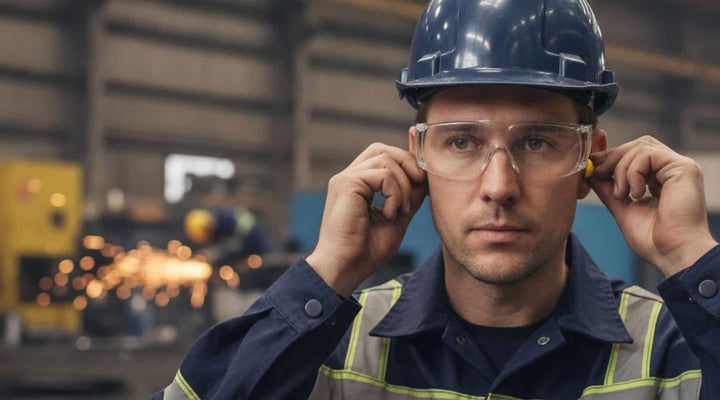
Hearing protection sells steadily because the exposure is invisible and the rule is strict. Under OSHA's noise standard, 29 CFR 1910.95, the permissible exposure limit is 90 dBA as an 8-hour time-weighted average, and the action level that triggers a hearing conservation program is 85 dBA. Impulse noise must not exceed 140 dB peak. The CDC estimates 22 million workers face damaging noise on the job each year, so the demand base is enormous.
How to stock it: carry earmuffs across a spread of Noise Reduction Ratings, since a grinding shop needs far more attenuation than a warehouse. Stock both over-the-head and cap-mounted muffs, because crews already in hard hats cannot wear a standard headband. Add earplugs as the companion SKU for dual protection in the loudest environments. Bundle helmet-compatible earmuffs with your head protection lines, and the account orders two categories on one purchase order.

4. Hi-vis safety shirts and apparel
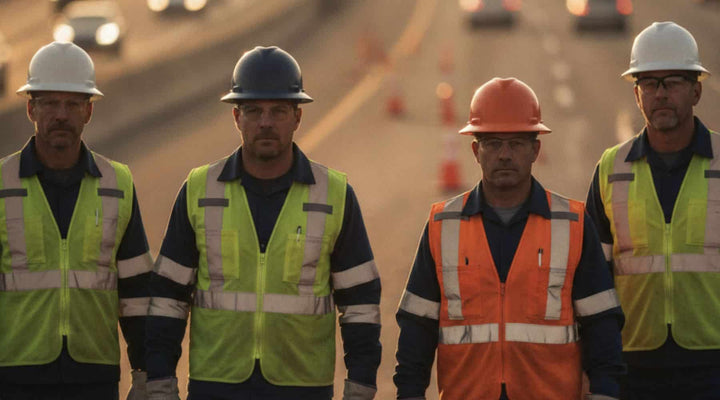
High-visibility apparel keeps climbing because compliance risk now drives sourcing. The governing standard is ANSI/ISEA 107-2020, which sets performance types and classes for high-visibility safety apparel. Type R covers roadway and temporary traffic control, Type O covers off-road environments, and garments carry a Class 1, 2, or 3 rating based on the amount of background and reflective material. Plenty of low-cost hi-vis carries a class claim on a label that lacks the required compliance details, and that gap becomes the buyer's liability.
How to stock it: keep Class 2 and Class 3 as your core, since those cover most roadway and higher-risk work, and hold Class 1 for parking and low-speed settings. Carry safety shirts, vests, and outerwear so an account can outfit a crew head to toe. Stock size-inclusive ranges, including women's fit, and keep the compliance documentation on hand. Verified hi-vis, backed by paperwork, closes the sale.
5. Safety eyewear and eye protection
Eye protection rounds out the five because the injury volume is relentless and the fix is cheap. NIOSH estimates about 2,000 eye injuries happen in American workplaces every day. OSHA's eye and face rule, 29 CFR 1910.133(b)(2), accepts protective devices that meet or exceed ANSI/ISEA Z87.1, the American national standard for eye and face protection. A buyer scanning a label wants that Z87.1 mark, plus the right lens for the task.
How to stock it: carry clear, tinted, and anti-fog lenses, since indoor, outdoor, and humid environments each demand a different lens. Stock both spectacles and goggles, because chemical splash and fine dust call for a sealed fit that glasses cannot give. Offer OTG (over-the-glasses) styles for the large share of workers who wear prescriptions. Bundle Z87.1 eyewear with your head and hearing lines as a jobsite starter kit that lifts your average order value.
Stocking reference: rating and range at a glance
| Product | Key Standard or Rating | Stocking Note for Distributors |
|---|---|---|
| Cut & Impact Gloves | ANSI/ISEA 105 (A1–A9), ANSI/ISEA 138 (Level 1–3) | Carry the full cut range in sizes S–2XL. Bundle cut-resistant and impact gloves for oil & gas, construction, and demolition industries. |
| Safety Helmets & Hard Hats | ANSI/ISEA Z89.1 – Type I / II, Class G / E / C | Stock both helmet types and all three electrical classes. Include vented models for workers in hot environments. |
| Earmuffs & Hearing Protection | OSHA 1910.95 – 90 dBA PEL, 85 dBA Action Level | Offer a range of Noise Reduction Ratings (NRR). Include cap-mounted earmuffs for employees wearing hard hats. |
| Hi-Vis Safety Shirts & Apparel | ANSI/ISEA 107-2020 – Type R / O, Class 1 / 2 / 3 | Maintain inventory of Class 2 and Class 3 garments in inclusive sizing, including women's fits. Keep compliance documentation available. |
| Safety Eyewear | ANSI/ISEA Z87.1 (OSHA 1910.133) | Stock clear, tinted, polarized, and anti-fog safety glasses. Include goggles and over-the-glasses (OTG) styles for specialized applications. |
Turn the five into repeat orders
The distributors who move the most of these five do one thing differently. They stop selling single SKUs and start selling matched sets. A crew outfitting order that pairs Z87.1 eyewear, helmet-compatible earmuffs, a Type II helmet, cut gloves, and Class 3 hi-vis is one purchase order, one shipment, and one supplier the account keeps calling. When 5,070 workers died on the job in 2024, a 4.0 percent drop from 5,283 in 2023 per the Bureau of Labor Statistics, buyers took it as proof that stocking the right, rated gear works, and they doubled down on suppliers who carry it.

That is the whole strategy behind these five categories. Stock the ratings buyers cite, the sizes their crews actually wear, and the bundles that let one order cover a jobsite. Do that, and you become the account's default rather than one of three quotes.
"Nobody wins a distribution account on price alone anymore. You win it by being the supplier who already has the right rating in the right size on the shelf, so the buyer never has to place a second call. That is what stocking to the standard buys you."
Joel Abbo, CEO, Caco Abbo Group
Frequently asked questions
What are the most in-demand safety products for distributors in 2026?
The five moving fastest are cut and impact safety gloves, ANSI-rated safety helmets and hard hats, earmuffs and hearing protection, hi-vis safety apparel, and safety eyewear. Demand is rising because buyers now purchase against specific ANSI/ISEA and OSHA standards, which rewards distributors who stock the exact ratings and sizes those buyers specify.
Which glove cut ratings should a distributor carry?
Carry the full ANSI/ISEA 105 range rather than only mid-level gloves. General assembly usually calls for A2 or A3, while glass handling, sheet metal, and demolition need A4 through A6 or higher. Stock impact-rated gloves under ANSI/ISEA 138 as well, in sizes from small through 2XL, so one line covers a mixed crew.
What is the difference between Type I and Type II hard hats?
Under ANSI/ISEA Z89.1, Type I helmets protect against top impact only, while Type II helmets protect against both top and lateral impact. Electrical classes are separate: Class G is tested at 2,200 volts, Class E at 20,000 volts, and Class C offers no electrical protection. Stock both types and all three classes to cover any account.
How do I know if hi-vis apparel is actually compliant?
Compliant garments meet ANSI/ISEA 107-2020, which defines Type R and Type O and Class 1, 2, and 3 based on background and reflective material. Many low-cost garments claim a class on a label that lacks the required compliance details. Stock verified apparel, keep the documentation, and you protect both the worker and your account's audit record.
Stock the shelf buyers reorder from
The distributors who grow in 2026 will carry these five categories at full rating, full size, and in bundles that let one order cover a jobsite. Caco America supplies exactly that range, from GE PPE gloves and helmets to hi-vis and Z87.1 eyewear, with the ratings and documentation industrial buyers ask for. Browse the full catalog or apply to become a distributor at cacoamerica.com, and stock the shelf your accounts keep reordering from.