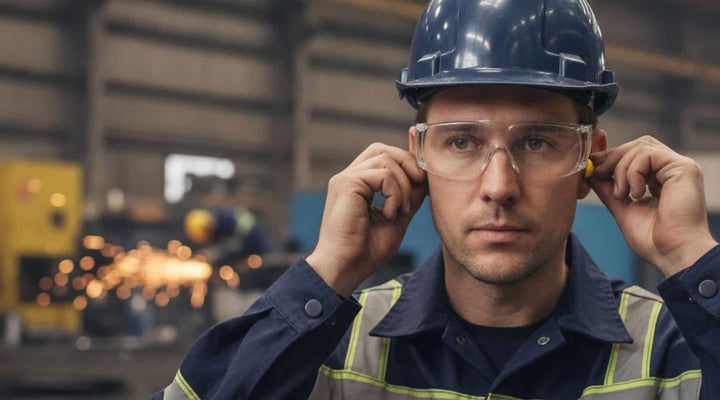
Safety equipment innovation now centers on three areas: head protection that guards the sides of the skull and stays put in a fall, hearing protection that balances noise reduction against situational awareness, and connected wearables that log exposure in real time. For distributors, each shift changes which products earn a place in the catalog and how buyers compare them.
I have spent more than 30 years in this trade, joining our family business in 1992 and later securing the exclusive General Electric (GE) PPE license across the Americas and the Caribbean, plus the first WD-40 microfiber towel license. We now move product through 38-plus countries. From that vantage, one pattern is clear. The categories that used to compete on price are now competing on engineering, and the distributors who understand the engineering keep the accounts.
Head protection innovations: from hard hat to safety helmet
The biggest change in head protection is structural. Traditional hard hats guard the top of the head but offer minimal side-impact protection and lack chin straps, so they can fall off during a slip or trip. Modern safety helmets close that gap. In its March 2024 Safety and Health Information Bulletin, OSHA described the shift and confirmed it now issues Type II, Class G safety helmets to its own employees.
The standard behind these products, ANSI/ISEA Z89.1, recognizes two impact Types and three electrical Classes. Type I protects against a blow to the top of the head. Type II protects the top and the sides. Class G head protection is proof-tested at 2,200 volts, Class E at 20,000 volts, and Class C carries no electrical protection. A distributor who can state those figures from memory sells to a safety manager with confidence.
What the new head protection features mean for your catalog
Newer safety helmets carry features that hard hats never did. Chin straps keep the helmet on during a fall from height. Vents cut heat buildup, though vented models cannot be used for electrical work. Some designs add face shields, and others integrate hearing protection or communication systems directly into the shell.
Our own GE safety helmet line is built with Koroyd technology and marketed as running cooler than conventional shells, which answered a specific request from oil, gas, and construction buyers who wanted heat relief without giving up protection. When you stock head protection now, carry the range. Keep Type I hard hats for lighter-duty accounts, stock Type II safety helmets with chin straps for at-height and construction work, and label the electrical Class on every SKU so electrical contractors can self-select.
Hearing protection innovations: earmuffs that do more than block sound
Hearing protection is where the science and the sales conversation have both moved fastest. The old pitch was simple: a higher Noise Reduction Rating meant a better product. That framing is now incomplete. Over-attenuation isolates a worker from alarms, reversing vehicles, and coworkers, which creates its own hazard. The newest earmuffs solve for the right amount of protection, not the maximum.
Two thresholds anchor every hearing conversation. Under OSHA 29 CFR 1910.95, the permissible exposure limit is 90 dBA as an 8-hour time-weighted average, and the action level, at which an employer must run a hearing conservation program, is 85 dBA. The Noise Reduction Rating printed on every compliant earmuff is an EPA-required label metric under 40 CFR Part 211. Level-dependent electronic earmuffs now amplify quiet speech while clamping down on impulse noise, so a worker hears a warning shout and still gets protected from a hammer strike.

Connected and wearable safety tech: the data layer
The third frontier is connectivity. Sensors are moving into gear that used to be passive. Impact-indicator technology can be mounted on protective headwear to flag a possible concussion event, a feature OSHA notes in the same 2024 bulletin. Communication systems built into earmuffs let crews talk across a loud site without removing protection. Exposure-logging dosimeters track a worker's real noise dose across a shift rather than relying on a single spot reading.

For a distributor, connected gear is a different sale. It carries a higher price, a real feature story, and a stickier account, because a buyer who standardizes on a communication-integrated system does not switch suppliers casually. Start small. Stock one or two connected lines in hearing protection and head protection, learn the buyer questions, and expand once the demand is proven. The margin lives in the engineering, not the discount.
Innovation reference: what changed and what to stock
| Innovation | What Changed | Category | Recommended Stock |
|---|---|---|---|
| Type II Safety Helmets | Added top and side-impact protection plus secure chin straps for improved worker safety. | Head Protection | Type II, Class G helmets with chin straps for at-height work. |
| Vented & Cooling Shells | Airflow channels and Koroyd-style construction help reduce heat buildup during extended wear. | Head Protection | Vented models for hot environments and non-vented Class E helmets for electrical work. |
| Level-Dependent Earmuffs | Amplify speech while reducing impulse noise, improving communication and situational awareness. | Hearing Protection | Electronic earmuffs alongside standard high-NRR passive earmuffs. |
| NRR-Labeled Passive Muffs | EPA NRR labeling helps users select the correct level of noise attenuation. | Hearing Protection | Offer multiple NRR ratings to suit different workplace noise levels. |
| Impact-Indicator Sensors | Built-in sensors detect significant impacts and flag potential concussion events. | Connected Wearable | Sensor-ready helmets for high-impact and struck-by hazard environments. |
| Comms-Integrated Protection | Enables workers to communicate clearly on noisy job sites without removing PPE. | Connected Wearable | Stock one or two integrated communication models to evaluate customer demand. |
Why the innovation story is also a trust story
None of this matters if the buyer cannot trust the label. When 5,070 workers died on the job in 2024, down 4.0 percent from 5,283 in 2023 per the Bureau of Labor Statistics, and the fatal injury rate held at 3.3 per 100,000 full-time workers, safety managers stopped treating protective gear as interchangeable. Innovation raises the ceiling on what equipment can do, but only if the product actually meets the standard on its packaging.
That is why licensed lines carry weight in B2B purchasing. A buyer choosing our GE PPE range is buying a name that stands behind the rating, and the distributor who stocks it inherits that credibility. Innovation and trust are not separate selling points. The newest smart helmet or electronic earmuff only closes the sale when the paperwork behind it holds up in an audit.
"Every few years a category we thought was finished gets reinvented. Earmuffs went from a foam cup to a device that decides which sounds to let through. The distributors who win are the ones who learn the new story fast enough to tell it before the competition does."
Joel Abbo, CEO, Caco Abbo Group
Frequently asked questions
What is the biggest recent innovation in safety helmets?
The move from traditional hard hats to Type II safety helmets. Type II protection guards the top and sides of the head, and modern helmets add chin straps that keep the helmet on during a slip or fall. OSHA now issues Type II, Class G safety helmets to its own employees, a strong signal for buyers.
How are modern earmuffs different from older hearing protection?
Older earmuffs simply blocked as much sound as possible. Level-dependent electronic earmuffs amplify quiet speech and warning sounds while clamping down on loud impulse noise, so workers keep situational awareness. The Noise Reduction Rating on the label, required by the EPA, still lets buyers match attenuation to the actual noise dose.
What does the NRR on an earmuff mean?
The Noise Reduction Rating is a single-number decibel figure, required on hearing protector labels under EPA rule 40 CFR Part 211. It estimates how much a device reduces noise exposure. For distributors, stocking a range of NRR values matters because over-attenuation can isolate a worker from alarms and coworkers.
Should distributors stock connected safety gear yet?
Yes, selectively. Sensor-equipped headwear and communication-integrated earmuffs command higher margins and build stickier accounts. Start with one or two lines, learn the buyer questions, and scale once demand is proven rather than committing deep inventory before the category matures.
Stock the innovations your buyers are already asking about
Safety equipment innovation rewards the distributor who can explain it. Type II helmets, level-dependent earmuffs, and connected wearables all sell on engineering, not price, and each one deepens the account. Caco America carries the full range, from GE safety helmets to earmuffs to hand tools, with the standards documentation industrial buyers expect. Browse the full catalog or apply to become a distributor at cacoamerica.com, and stock the gear that keeps your accounts ahead of the standard.