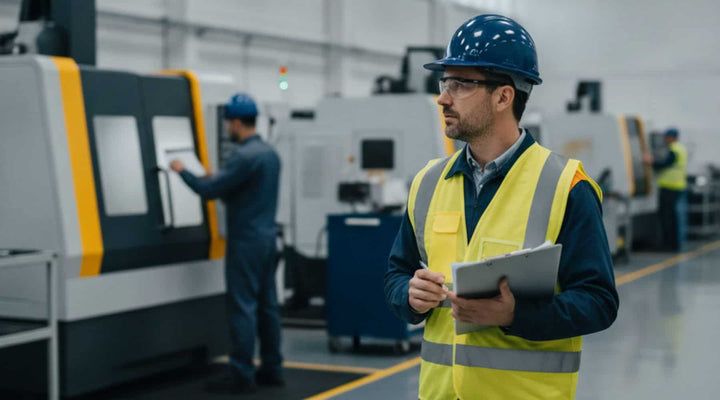
High-quality PPE equipment protects productivity as directly as it protects people. Every recordable injury pulls a worker off the line, triggers downtime, and adds cost that rarely shows up on the purchase order. Quality safety gear reduces the incident rate that drives those losses, which turns protective equipment from an expense into a measurable investment.
I have spent more than 30 years in this business. I joined my family's company in 1992, and Caco Abbo Group now holds the exclusive General Electric (GE) PPE license across the Americas and the Caribbean, along with the first WD-40 microfiber towel license, distributing into 38-plus countries. In that time I have watched the buyers who treat safety gear as a cost center lose money to it, and the ones who treat it as an investment protect their margins. This is the business case for the second approach.
The real cost of an injury is bigger than the claim
A workplace injury looks like a single line item until you add up what surrounds it. The direct claim is only the visible part. Underneath sit the hidden costs: the downtime while a task stops, the overtime paid to cover the gap, the retraining, the paperwork, and the productivity lost by every other worker pulled into the incident.
The national numbers make the scale clear. The National Safety Council estimates the total cost of work injuries in the United States reached $181.4 billion in 2024, including $54.9 billion in wage and productivity losses alone. Averaged across the workforce, that works out to roughly $1,120 per worker, whether or not that worker was ever hurt. For a distributor's industrial clients, those figures are not abstract. They are the exact costs that quality safety gear is bought to prevent.
Downtime is the productivity tax nobody budgets for
Injuries do not just cost money. They cost time, and time is production. The Bureau of Labor Statistics recorded 2,488,400 nonfatal workplace injuries and illnesses in private industry in 2024. Of those, 888,100 were serious enough to involve days away from work, with a median of 8 days away per case.
Eight days is a full production cycle for many operations. Multiply a median absence like that across a crew, a season, or a fleet, and the productivity drain becomes structural rather than occasional. The National Safety Council estimates work injuries caused 102 million days lost in 2024. Well-fitted, correctly rated gear is one of the few levers a buyer can pull to keep those days on the floor instead of in a claims file.

The evidence: better gear means fewer incidents
The fatality data shows what sustained investment in safety produces over time. The BLS Census of Fatal Occupational Injuries recorded 5,070 fatal work injuries in 2024, down 4.0 percent from 5,283 in 2023, with the rate falling to 3.3 per 100,000 full-time-equivalent workers from 3.5. A worker still died roughly every 104 minutes, so the work is far from finished, but the trend rewards the employers who kept raising their standards.
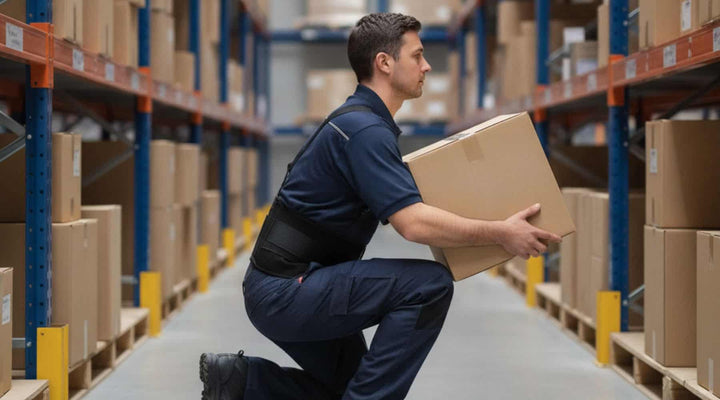
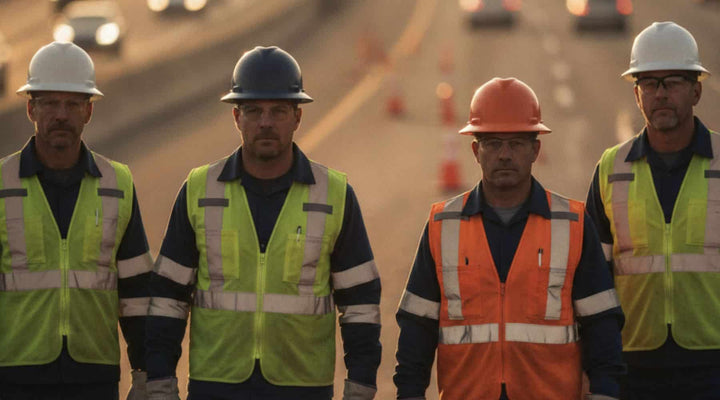
Quality gear drives that trend at the injury level too. Correctly rated cut-resistant gloves lower hand injuries on tasks involving glass, sheet metal, and blades. Properly fitted back support belts and ergonomic aids reduce the overexertion strains that dominate lost-time claims. Compliant high-visibility apparel cuts struck-by exposure in traffic and yard environments. Each category maps to a specific injury type, and each prevented injury is a day of production kept.

Why fit and quality change the productivity math
Cheap gear fails in two ways that both cost productivity. It fails at protection, and it fails at comfort. A glove that does not fit gets removed. A vest that traps heat gets unzipped. A belt that pinches gets left in the truck. Protective equipment only works when workers actually wear it through a full shift, and comfort is what makes that happen.
This is why ergonomic-focused gear earns its price. When a back support belt sits right or a glove keeps dexterity, the worker keeps it on and keeps moving. Quality also means the gear survives an audit. OSHA's general PPE standard, 29 CFR 1910.132, requires employers to assess hazards, provide suitable equipment, and ensure it fits each worker. Gear that meets that bar protects the worker and the compliance record at the same time.
The productivity math: factor, impact, and how quality gear helps
| Safety Product | Primary Workplace Hazard | Why It's in High Demand in 2026 |
|---|---|---|
| Cut-Resistant Gloves | Sharp tools, metal edges, and glass handling. | Advanced materials provide superior cut protection while maintaining comfort and dexterity for all-day use. |
| Fall Protection Harnesses | Falls from elevated work areas. | Lightweight designs, improved adjustability, and ANSI-compliant features make them essential for construction and maintenance work. |
| High-Visibility Safety Apparel | Low-light conditions and moving vehicles. | Enhanced reflective materials improve worker visibility and help reduce struck-by incidents on busy job sites. |
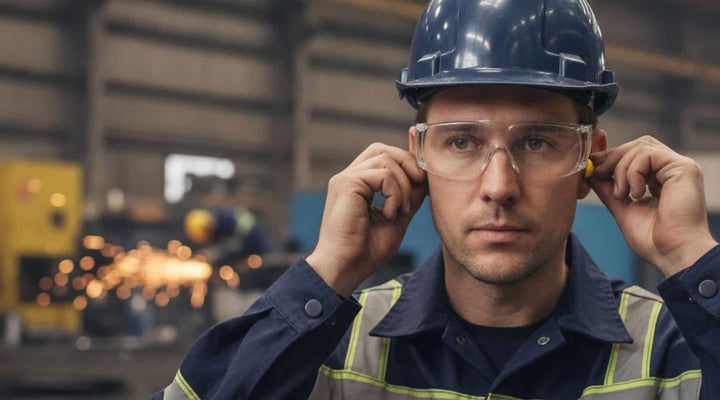
| Protective Safety Eyewear | Flying debris, dust, and chemical splashes. | Anti-fog and scratch-resistant lenses increase comfort and encourage consistent eye protection throughout the workday. |
| Respiratory Protection | Dust, fumes, airborne particles, and hazardous chemicals. | Growing awareness of air quality and stricter safety regulations have increased demand across multiple industries. |
"I tell every distributor partner the same thing. The client who buys the cheapest glove is not saving money, they are deferring a bill that arrives with interest. High-quality safety gear is the rare purchase that pays for itself twice, once in fewer injuries and once in the productivity you never lose."
Joel Abbo, CEO, Caco Abbo Group
The distributor's role: sell the investment, not the unit price
Here is where distributors either add value or leave it on the table. A buyer staring at two gloves sees a price gap. A distributor who knows the data sees the full equation: the cheaper glove that gets replaced twice as often, generates more hand injuries, and costs days away from work. Reframing that conversation from unit price to total cost is the single most useful thing a distributor can do for a client.
That reframing is easier with the right catalog behind it. Carrying rated, branded, properly sized lines across hand protection and every other category lets a distributor match gear to task and back the recommendation with a standard. Sell the outcome, fewer injuries and protected productivity, and the unit price stops being the whole conversation.
Frequently asked questions
Does high-quality safety gear actually improve worker productivity?
Yes, indirectly but measurably. Quality PPE reduces the injuries that pull workers off the job. With a median of 8 days away per serious injury and 102 million total days lost to work injuries in 2024 (BLS and NSC data), every prevented incident keeps a skilled worker producing rather than recovering. Comfortable, well-fitted gear also stays on through a full shift, so its protection is never switched off.
How do I show a client that better PPE equipment is worth the higher price?
Move the conversation from unit price to total cost. The National Safety Council put the total cost of work injuries at $181.4 billion in 2024, including $54.9 billion in lost wages and productivity, which averages about $1,120 per worker. A cheaper glove that fails, gets replaced often, and lets an injury through costs far more than its sticker saving once downtime, claims, and retraining are counted.
What makes safety gear high quality from a compliance standpoint?
Quality gear carries the correct performance rating for the task, fits the individual worker, and holds up to documentation. OSHA's general PPE standard, 29 CFR 1910.132, requires employers to assess hazards, provide suitable equipment, and ensure proper fit. Gear that meets a recognized rating and fits correctly protects both the worker and the employer's audit position.
Which industrial safety supplies deliver the clearest injury reduction?
The categories that map to the most common lost-time injuries deliver the most obvious returns: cut-resistant gloves for hand injuries, back support belts and ergonomic aids for overexertion strains, and compliant high-visibility apparel for struck-by exposure. Matching the gear to the client's actual injury pattern gives the strongest safety gear benefits.
Stock the gear that protects productivity, not just the price point
The distributors who grow are the ones who help clients see safety gear as an investment with a return, backed by verified data and the right catalog. Caco America supplies that range, from GE PPE and hand protection to hi-vis and ergonomic support, with the quality and documentation industrial accounts require. Explore the full industrial safety supplies catalog at cacoamerica.com, and stock the gear that keeps your clients' workers safe, compliant, and producing.