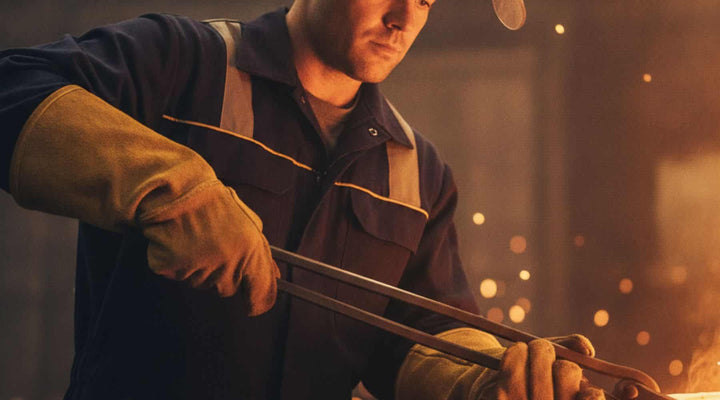
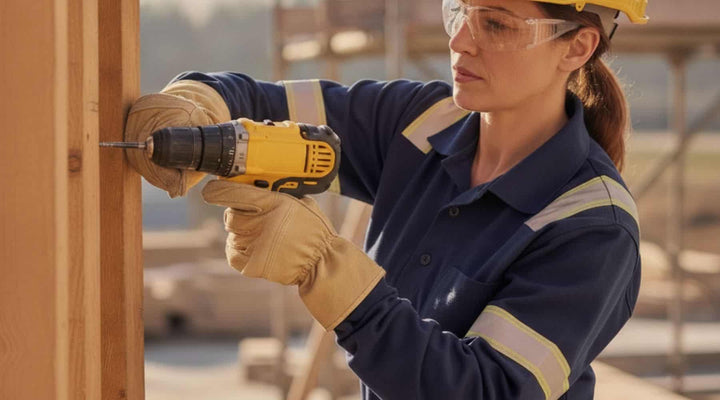
Industrial coveralls come in two working families: reusable woven garments for abrasion and grime, and disposable spun-bonded garments for dust and light splash. Neither is flame resistant, and neither stops chemicals unless rated for the specific substance. Match the garment to the hazard, then confirm the fit lets workers bend and reach.
That is the answer in four sentences. The rest of this guide is the version I give buyers at CACO America, because protective clothing is the PPE category where mismatched expectations cause the most trouble. I joined our family company in 1992, I have spent more than 30 years watching accounts order the wrong suit for the job, and the fix is almost always the same: name the hazard first.
One garment, one job
Safety workwear covers at least four different jobs, and they rarely live in the same garment. Barrier protection keeps dust, dirt, and light splash off skin and street clothes. Abrasion protection absorbs the scuffs and snags of mechanical work. Visibility makes a worker conspicuous to drivers and equipment operators. Flame resistance keeps a garment from igniting and continuing to burn.
A poly-cotton work coverall handles abrasion and grime but offers no flame resistance. A white disposable suit sheds drywall dust but shreds on rough steel. A hi-vis vest does nothing for either hazard. Buyers who expect one suit to do everything end up protected against nothing in particular.
OSHA's construction PPE rule at 29 CFR 1926.95 names protective clothing directly: it must be provided, used, and maintained wherever process, chemical, or mechanical hazards make it necessary. The rule assumes someone identified the hazard. Start there.

| Garment Type | Protects Against | Does NOT Protect Against |
|---|---|---|
|
Woven Coveralls (Poly-Cotton, Canvas) |
Abrasion, snags, grime, oil smudges, and sun exposure on the skin | Flash fire, arc flash, chemical permeation, and fine dust ingress |
|
Disposable Coveralls (Spun-Bonded) |
Dust, dirt, non-hazardous light splash, and cross-contamination | Abrasion, tears during rough work, chemicals without a specific rating, heat, and flame |
|
FR Clothing (NFPA 2112 or 70E Rated) |
Ignition and continued burning during flash fire or arc flash exposure | Chemical permeation; it is also not a substitute for de-energizing electrical equipment |
|
Hi-Vis Apparel (ANSI/ISEA 107) |
Low-visibility struck-by risks near traffic and moving equipment | Every physical, chemical, and thermal hazard listed above |
Reusable woven coveralls: the workhorse
The classic work coverall is a woven garment, usually a poly-cotton blend or cotton canvas. Polyester brings tear strength and shape retention through industrial laundering. Cotton brings breathability and comfort against skin through a long shift. Canvas trades some comfort for serious abrasion resistance.
This is the garment for mechanics, maintenance crews, fleet shops, and plant floors. The hazard profile is grease, grime, sharp edges, and constant contact with equipment, and a woven suit soaks up that punishment for years. Look for triple-stitched seams, bar tacks at pocket corners, a two-way zipper behind a storm flap, and elastic or adjustable cuffs that keep sleeves out of rotating parts.
One honest limit. A woven coverall keeps grime off the worker, but fine dust passes through and around it. When the hazard is particulate, the answer changes.
Disposable coveralls: dust, dirt, and light splash
Disposable coveralls are made from spun-bonded polyethylene and polypropylene fabrics, engineered as a nonwoven barrier rather than a weave. They exist for particulate work: sanding, insulation, fiberglass, spray painting overspray, mold remediation, and general dirty-room entry. Options like attached hoods, boot covers, and elastic cuffs close the gaps that a woven garment leaves open.
Sizing on these garments has its own standard. ANSI/ISEA 101-2014 (R2019), listed on the ISEA standards page, covers size and labeling requirements for limited-use and disposable coveralls, which is why a properly labeled suit fits predictably across brands.
Now the caution I repeat on every call. A general-purpose disposable suit is not chemical protection. Splash and permeation resistance depend on the specific fabric against the specific chemical, so pull the manufacturer's chemical data before anyone trusts a suit near hazardous liquids. Your hazard assessment names the substance; the garment rating must answer it.

FR clothing: know when to refer to the spec
Flame-resistant clothing is its own discipline, governed by its own standards. NFPA 2112 sets performance requirements for flame-resistant garments that protect industrial workers against short-duration thermal exposures from fire, the flash fire scenario in oil, gas, and chemical processing. NFPA 70E, the electrical safety standard, drives arc-rated clothing selection for workers exposed to arc flash.
Here is the straight version of how we handle it at CACO America. Our standard woven and disposable coverall lines are not FR garments, and we never let a distributor present them as if they were. When an account has flash fire or arc flash exposure, the purchase runs through the site's FR clothing specification, with garments certified to the relevant standard and matched to the assessed energy level. Knowing when to say "this account needs FR, follow the spec" is what separates a safety supplier from a catalog. Distributors who make that call earn the rest of the order.
Where hi-vis fits in
Visibility is the fourth job, and it stacks on top of the others rather than replacing them. A mechanic in navy coveralls who steps into a yard with moving trucks needs hi-vis safety vests or hi-vis outer garments over the workwear, certified to ANSI/ISEA 107 with the right class for the traffic exposure.
Some coveralls solve this natively with fluorescent fabric and retroreflective tape, which suits utility and roadside fleets. For everyone else, the vest-over-coverall combination is cheaper and more flexible, because the visibility layer transfers between workers and outfits. We broke down classes, colors, and tape configurations in our guide to safety vests and hi-vis clothing, and everything there applies unchanged when the base layer is a coverall.
Fit and range of motion
The OSHA fit rule applies to clothing, not just helmets and gloves. 29 CFR 1926.95(c) requires PPE of safe design and construction for the work, selected to ensure it properly fits each affected employee. A coverall fails that test in ways a spec sheet never shows: a torso too short to squat in, shoulders that bind on an overhead reach, legs that ride up over boot tops.
My fit check takes thirty seconds. Have the worker squat fully, reach overhead with both arms, and kneel on one knee. The zipper should not strain, cuffs should stay over the wrist and ankle, and the seat should not pull. Workers wearing gloves from your hand protection program should still get sleeves over the cuff line. A suit that restricts movement gets left unzipped or unworn, and an unworn garment protects no one.
Layering and the laundering question

Two practical points decide the daily economics of protective clothing.
Layering first. Coveralls are sized to go over street clothes or base layers, which is why numeric and alpha sizing both run generous. In cold work, the insulation lives underneath; the coverall is the shell and grime barrier. Order size up when crews layer heavily, and test the squat-and-reach check with the winter kit on.
Then the reuse math. A woven coverall costs more up front and pays it back across dozens of industrial wash cycles, as long as laundering actually happens; a contaminated garment rewashed at home spreads the exposure. A disposable suit costs a few dollars, works one shift, and leaves as waste. High-turnover dirty work usually favors disposables once you price laundering logistics honestly. Quality signals for the reusable side, seams, zippers, and fabric weight, are the same ones from our guide to identifying quality safety gear.
"Every coverall order is really a question about the hazard. When a distributor asks what the crew is exposed to before asking what size they wear, I know that account is in good hands." - Joel Abbo, CEO, Caco Abbo Group
For distributors: stocking the coverall category
Protective clothing rewards distributors differently than any category we carry, and we support partners in more than 38 countries, holding the GE license across our GE PPE lines and the first license for WD-40 branded microfiber towels. Three stocking rules:
- Coveralls are a uniform-program adjacency.The account buying work coveralls also buys embroidery, locker service, and replacement cycles. Win the garment and you are one conversation from the whole program, the relationship play we described in navigating the safety gear market.
- Depth beats breadth on the size curve.A crew order dies when 2XL is out of stock. Stock the full run from S through 4XL in your core woven style before adding a second style, because a broken size curve sends the entire order to a competitor.
- Disposables are a consumable reorder.Crews burn cases weekly, which makes disposable coveralls behave like nitrile gloves: predictable, recurring, and worth a standing order. Set the reorder cadence at the first sale.
Frequently Asked Questions
1. What are industrial coveralls?
Industrial coveralls are one-piece garments that protect a worker's body and clothing from workplace hazards like grime, abrasion, and dust. They come in reusable woven fabrics, usually poly-cotton or canvas, and disposable spun-bonded fabrics for particulate work. The right choice depends on the hazard identified in the site's PPE assessment, not on price alone.
2. What is the difference between work coveralls and disposable coveralls?
Work coveralls are woven, laundered, and reused for months or years, built for abrasion and grime in mechanical work. Disposable coveralls are nonwoven spun-bonded garments worn for a shift and discarded, built to keep dust, dirt, and light splash off the worker. One resists wear; the other seals out particles. Many crews need both on different days.
3. Do disposable coveralls protect against chemicals?
Only when the specific garment is rated for the specific chemical. General-purpose disposable suits handle dust and non-hazardous light splash, but splash and permeation resistance vary by fabric and substance. Check the manufacturer's chemical performance data against the chemicals named in your hazard assessment before trusting any suit near hazardous liquids.
4. What standard covers disposable coverall sizing?
ANSI/ISEA 101-2014 (R2019) covers size and labeling requirements for limited-use and disposable coveralls. It is the reason a labeled size fits consistently across compliant brands. For reusable woven coveralls, sizing follows each manufacturer's chart, so fit-test samples with the actual crew before committing to a large order.
5. Are regular coveralls flame resistant?
No. Standard poly-cotton and canvas coveralls are not flame-resistant garments, and untreated polyester can melt in a thermal event. Flame resistance requires clothing certified to NFPA 2112 for flash fire or selected under NFPA 70E for arc flash. If a job involves either exposure, follow the site's FR clothing specification.
6. How should industrial coveralls fit?
Loose enough for full range of motion, trim enough to stay clear of machinery. OSHA's 29 CFR 1926.95(c) requires PPE that properly fits each employee. Test a squat, an overhead reach, and a kneel: no zipper strain, no cuffs riding up, no binding at the shoulders. Size up when workers layer for cold weather.
7. Is it cheaper to launder coveralls or buy disposables?
It depends on turnover and contamination. Woven coveralls win when garments survive many industrial wash cycles and laundering logistics exist. Disposables win for high-turnover dirty work, contamination that should leave the site in a bag, and visitor use. Price the full cycle, garment, laundering, replacement, and disposal, before choosing.
Ready to build your protective clothing program?
If you distribute safety gear, coveralls belong in your core lineup: a woven workhorse in a deep size run, a disposable case program on a reorder cadence, and the judgment to route FR requirements to the spec. CACO America supplies distributor partners from the full catalog with the pricing and size-curve depth this category demands. Become a CACO distributor and we will help you map the coverall matrix to the accounts you serve.