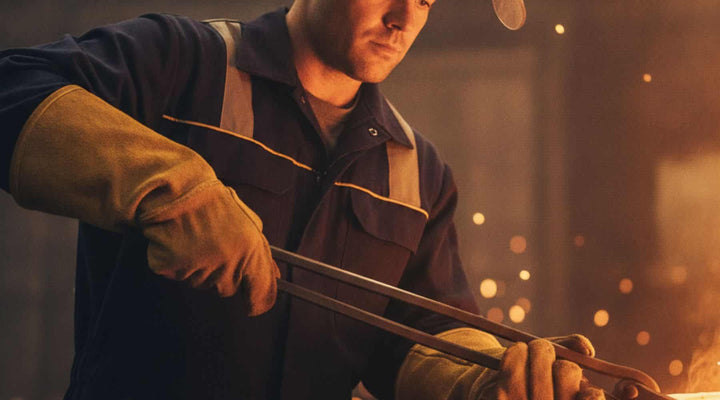
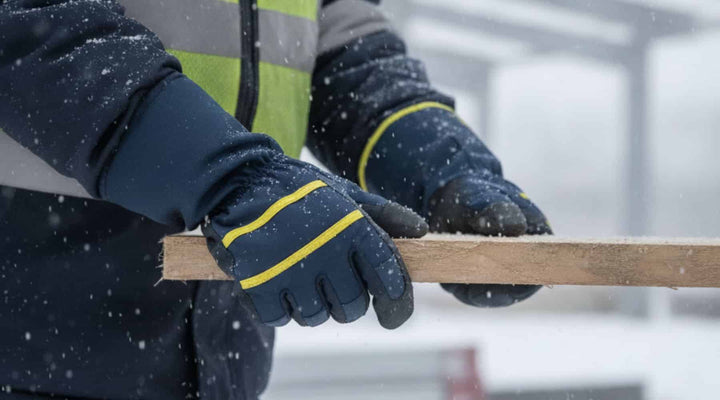
Work gloves for women are not a courtesy size run. OSHA now requires personal protective equipment that properly fits each employee, and a glove cut for a larger male hand fails that test the moment grip or dexterity suffers. Caco America stocks women's and small-size hand protection so distributors can meet the rule.
I joined our family business in 1992, and over thirty-plus years we have grown into a PPE distribution operation serving more than thirty-eight countries, holding the exclusive General Electric (GE) PPE license for the Americas and the Caribbean, along with a WD-40 license. I read markets through purchase orders, and the clearest shift I have watched in the last five years sits at the small end of the glove size curve. This guide explains why fit became a compliance issue, and what buyers on both sides of the counter should do about it.
The problem: gloves were sized to somebody else's hands
For decades, most PPE was designed around anthropometry data drawn from male workers, and everyone else made do. The National Institute for Occupational Safety and Health (NIOSH) studies this directly. Its science bulletin on PPE fit in construction describes what happens when equipment misses the wearer: safety glasses slip, footwear raises blisters, and loose gloves catch on machinery or leave skin exposed. NIOSH also notes that poor fit falls hardest on smaller-framed workers.
The pattern is not new. OSHA and its construction advisory committee documented the difficulty women face finding properly fitting PPE in a June 1999 report still listed on OSHA's construction PPE page, and CPWR, the construction industry's research center, still reports that women in the trades struggle to access PPE that fits.
Here is the safety chain: a glove that is too big reduces grip and dexterity, so the worker either fights the glove all shift or pulls it off for fine work. Either way, protection drops exactly when exposure starts.
The regulatory floor: 29 CFR 1926.95(c)
Fit stopped being an interpretation question on January 13, 2025. That is the effective date of OSHA's revised construction PPE standard, 29 CFR 1926.95(c), which now states that employers must ensure all PPE “is selected to ensure that it properly fits each affected employee.”
Read OSHA's own rationale and the women's fit issue sits near the center of it. The agency's final rule FAQ says the issue of improperly fitting PPE is particularly important for smaller construction workers, including some women, who may not be able to use standard size PPE. OSHA also notes it had already cited construction employers for failing to provide properly fitting PPE, so the rule clarified an obligation rather than inventing one. The change aligns construction with the fit language general industry has carried for years, a shift we flagged early in our 2026 industrial safety equipment trends outlook.
The practical translation for gloves: a bin of one-size unisex leather palms no longer covers a mixed crew.
What a women's fit actually changes in a glove
A women's glove is not a men's glove photocopied at 90 percent. Hands differ in proportion, not just scale, and a proper women's pattern adjusts at least three dimensions independently:
- Palm width.Women's hands typically run narrower through the knuckles relative to length. Shrinking a wide pattern leaves excess material flapping at the sides of the palm.
- Finger length and taper.Finger proportions differ, so scaled-down unisex fingers often end up too short in the stall but too wide at the base, which bunches material at every joint.
- Wrist circumference.A cuff sized for a larger wrist gapes, and a gaping cuff funnels in debris, dust, and splinters while letting the glove rotate on the hand.
When all three dimensions come from a female sizing model, the glove tracks the hand. Fingertips reach the leather, the palm stays put under torque, and the cuff seals. That is the difference between a glove someone tolerates and a glove someone keeps on.
How to measure a hand for gloves
Glove sizing starts with one number: the circumference of the dominant hand around the knuckles, thumb excluded. Wrap a soft tape or a strip of paper around the widest part of the palm, keep it snug but not tight, and mark where it overlaps. Add finger length, measured from the tip of the middle finger to its base, and wrist circumference if cuff fit matters for the job. Our guide to choosing work gloves covers the hazard side of the selection; the numbers below cover the fit side.

| Knuckle Circumference | Typical Unisex Size | Where Women's-Cut Sizing Usually Lands |
|---|---|---|
| 6 to 7 inches | XS | About a women's S to M |
| 7 to 8 inches | S | About a women's M to L |
| 8 to 9 inches | M | About a women's L to XL |
| 9 to 10 inches | L | Rarely reached in women's-cut ranges |
| 10 to 11 inches | XL | Rarely reached in women's-cut ranges |
Treat the table as a starting point, not a standard. Sizing conventions vary by manufacturer, so the chart printed for the specific glove line always wins.

Sizing traps: a unisex S is not a women's M
The most expensive mistake in glove buying is assuming the size letter means the same thing across patterns. It does not. A unisex small is a shrunken men's glove, wide through the palm for its length. A women's medium may share a similar circumference while cutting the palm narrower and the fingers longer. Same letter neighborhood, different glove.
Three traps show up constantly:
- Ordering down instead of across.Handing a small worker a unisex S when a women's-cut M would actually fit. The number shrank; the proportions never changed.
- Trusting “one size fits most.”For gloves, “most” quietly means “most of a sizing model built decades ago.”
- Skipping the fit check.Fit is verified on the hand: fingertips touching the end, no loose material at the palm sides, full fist closure without strain.
A five minute fitting beats a month of workarounds.
Materials where fit matters most
Every glove material punishes a bad fit differently, and three categories punish it hardest.
- Leather. Leather work gloves break in to the hand that wears them, which is why fit at purchase matters so much. A leather glove that starts a half inch too long stays too long forever; the fingertips just get softer while they flap. Women buying leather gloves should fit them snug at the start and let the hide relax into the hand.
- Cut-resistant knits. Cut-resistant gloves rely on an engineered shell hugging the skin. Oversize the knit and the loose fabric snags on edges and burrs, while the dexterity that justified a thin A4 shell disappears into folds of slack material.
- Coated and lined gloves. Palm-dipped general purpose gloves grip through a thin coating layer, and winter styles add an insulating liner. Excess interior volume makes the liner migrate and ball up at the fingertips, so the warm glove comes off, and the bare hand does the work in the cold.
Beyond gloves: fit runs through the whole kit
The fit requirement in 1926.95(c) covers PPE generally, not gloves alone, and the same proportional logic follows. Safety glasses built on a wide unisex frame slide down smaller nose bridges and leave gaps at the temples, which is why protective eyewear lines now include narrow-fit frames. A safety vest sized for a broad torso hangs loose, and loose hi-vis apparel near rotating equipment becomes its own snag hazard. Fall protection is the highest-stakes case of all: harnesses adjusted to the edge of their range still may not seat correctly across a smaller frame, and NIOSH has studied harness fit for female construction workers for exactly that reason.
Buyers who fix glove fit usually audit the rest of the kit next. Distributors should be ready for that second conversation.
For distributors: women's fit depth wins whole accounts
Now the part I watch from the warehouse floor. Women made up 11.3 percent of construction employment and 29.1 percent of manufacturing employment in 2025, against 47.1 percent of the employed workforce overall, per Bureau of Labor Statistics data. Read those numbers the way a distributor should: construction has enormous room to keep adding women, manufacturing already employs them by the millions, and every one of those workers now has a regulatory right to PPE that fits.

OSHA itself estimated that complying employers would need to locate and acquire alternative sizes of PPE. That sourcing burden lands on whoever supplies them, and it is winnable business. In a crowded safety gear market, the distributor who can fill an XS to M size run and a women's-cut line on one purchase order becomes the compliance answer for the whole account, not a line-item vendor.
“Twenty years ago the orders I processed stopped at medium, and small was an afterthought. Today I watch XS and S sell through first on entire accounts. Our size curve is the most honest demographic report I read, and it says the crews have already changed. Stock like it.” Joel Abbo, CEO, Caco Abbo Group
Stock the small end in depth, carry true women's-cut SKUs rather than relabeled smalls, and put sizing charts and sample pairs in front of every safety manager. Fit sells itself once someone tries it.
Frequently Asked Questions
1. Does OSHA require work gloves to fit properly?
Yes. Since January 13, 2025, 29 CFR 1926.95(c) requires construction employers to ensure PPE, gloves included, “properly fits each affected employee.” General industry carries equivalent fit language. OSHA treats the rule as a clarification of an existing duty, and it had already cited employers for ill-fitting PPE before the revision, so there is no grace period logic to lean on.
2. Are women's work gloves just smaller versions of men's gloves?
No, and that is the core buying mistake. A true women's pattern narrows the palm, adjusts finger length and taper, and reduces wrist circumference independently, because women's hands differ from men's in proportion rather than scale. A scaled-down unisex glove keeps the original proportions, so it stays wide in the palm and baggy at the cuff even when the length looks right.
3. How do I measure my hand for work gloves?
Wrap a soft tape around your dominant hand at the widest point of the knuckles, thumb excluded, and note the circumference in inches. That number maps to the size chart for the glove line you are buying. For a fuller picture, add middle finger length and wrist circumference. Check fit on the hand: fingertips reach the end, no slack at the palm, and a full fist closes without strain.
4. What size do women's work gloves usually run?
Most women land between a 6 and 8 inch knuckle circumference, which corresponds to roughly XS to S on typical unisex charts or S to L in women's-cut sizing. The overlap is exactly why letters mislead. Always match the measured circumference to the manufacturer's own chart for that specific glove, because conventions shift between brands and between unisex and women's patterns.
5. Why are ill-fitting gloves actually dangerous?
NIOSH notes that loose gloves can catch on moving machinery and leave skin exposed. Oversized gloves also cut grip strength and dexterity, since the hand grips the glove and the glove grips the tool. Workers who fight their gloves eventually remove them for precise tasks, and the bare-handed moment is when lacerations and abrasions happen.
6. What should women look for in leather work gloves?
Fit first, then hide. Choose a leather glove sized from a women's pattern or a genuine XS to S run, snug at purchase because leather relaxes as it breaks in. Look for keystone thumbs and rolled hems for dexterity, and match the leather weight to the task, lighter grain leather for handling work, heavier split leather for rough material.
7. How should distributors stock gloves under the PPE fit rule?
Carry every glove family in a full size run, XS through XL, and back the highest-volume styles with women's-cut SKUs. Depth at the small end matters more than breadth of styles, because a missing XS is now a compliance gap for the customer, not a substitution. Add sizing charts and fitting samples to the counter, and lead account reviews with the fit rule.
Put a glove that fits on every hand on the roster
The fit rule turned glove sizing from a preference into a specification, and the buyers who move first will set the standard on their sites. Caco America backs distributors with full size runs across our range, including GE PPE hand protection, with the depth to cover the small end of the curve. Browse the complete catalog, or apply to become a distributor and build a glove program that fits every worker your accounts hire next.