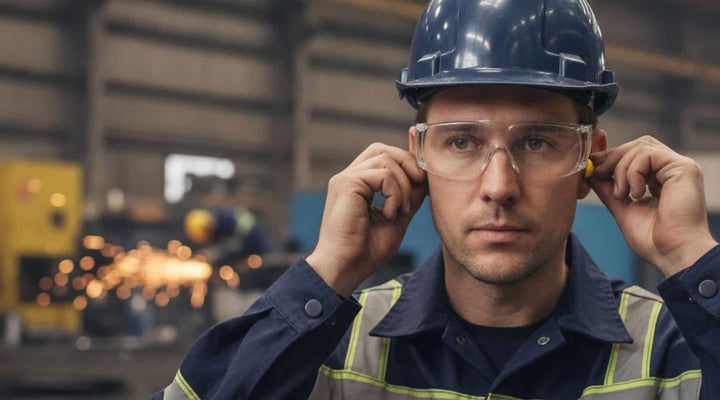
PPE for niche industries means protective equipment matched to one trade's specific hazard: shade-rated welding lenses, high cut-level gloves for glass plants, chainsaw leg protection, arc-rated clothing for utility crews. At CACO America, we have watched distributors win entire accounts because they stocked the specialized safety gear a generalist catalog skips.
The Overlooked 20 Percent of the Catalog
I joined our family business in 1992, and after more than 30 years selling PPE into 38 plus countries, I can tell you where the margin hides. It is not in commodity hard hats. Every supplier carries those, and buyers shop them on price alone. The money sits in the specialized 20 percent of the catalog that most distributors never build.
The demand is real. The U.S. Bureau of Labor Statistics counted 5,070 fatal work injuries in 2024 and 2,488,400 nonfatal recordable cases in private industry. Behind each incident category sits a niche trade with a gear requirement a generalist cannot answer. My reputation was built on identifying untapped product categories before competitors noticed them. This article walks through five trades we serve every day, then maps where the niche-PPE market extends beyond them.
Welding Bays: Gauntlets and Shade-Rated Lenses
Walk into a fab shop with a generic glove catalog and you will walk out empty handed. Welders need leather welding gloves with gauntlet cuffs that shrug off spatter, and their eye protection is regulated down to the lens shade. OSHA 1910.252(b)(2)(ii)(H) sets minimum filter shades by process: shade 10 for shielded metal arc welding with 1/16 to 5/32 inch electrodes, rising to shade 14 for the largest electrodes, while torch brazing needs only shade 3 or 4.
A distributor who can quote that table from memory becomes the supplier of record, and the stakes justify the homework. NIOSH reports that about 2,000 U.S. workers sustain a job-related eye injury requiring medical treatment every day. Stock shade-rated protective eyewear alongside the gloves and you own the whole bay. Shops that also forge or pour will ask about high-heat PPE, so note it on the same account audit.
Flooring and Finishing Trades: The Kneeling Workday

Flooring installers, tile setters, and finish carpenters spend most of their shift on their knees, so knee pads are not an accessory for them. They are the difference between a 20 year career and an early exit. Most industrial catalogs still treat knee protection as an afterthought with one SKU, one size.
Fit carries regulatory weight now. OSHA's construction PPE standard, 29 CFR 1926.95(c), requires that equipment “properly fits each affected employee,” a requirement made explicit by a final rule effective January 13, 2025. Carry gel and cap-style options in multiple sizes and you solve a problem the installer's current supplier does not know exists. Our guide to OSHA compliance for distributors covers the fit rule in depth.
Manual Material Handling: Belts, Sold Honestly
Warehouses ask for back support belts by name, and a smart distributor carries them. A smarter one sells them honestly. NIOSH reviewed the research and does not recommend relying on back belts to prevent injury, advising employers to redesign lifting tasks rather than treat belts as a cure all.
That guidance is a selling opportunity, not a problem. Position belts as one piece of a lifting program and pair them with an ergonomics line: lifting aids, anti-fatigue matting, and handling accessories. BLS counted 888,100 nonfatal cases involving days away from work in private industry in 2024. The buyer fighting that number wants a partner with a program, not a peg hook with a belt on it.
Glass and Sheet Metal: Cut Levels Above the Default
General purpose gloves fail fast against glass edges and sheared metal. ANSI/ISEA 105, the hand protection standard, grades cut resistance from A1 to A9. The lower levels protect against scrapes, while A7 to A9 address severe cut hazards. Glass plants, glazing crews, and sheet-metal shops live at the top of that scale, and most catalogs stop at the middle.
OSHA backs the upsell. Under 29 CFR 1910.138, employers must select hand protection based on the task, conditions, duration, and hazards identified. That evaluation points these trades toward high cut-level cut-resistant gloves, and often toward impact-resistant gloves rated under ANSI/ISEA 138 where pinch and strike hazards stack on top of cut risk.
Detailing and Maintenance: The Consumable Aisle
Not every specialized line protects a worker. Some protect the finish, and those are the lines that reorder themselves. Microfiber towels move through detailing shops, dealerships, and maintenance departments by the case, month after month. A hard hat sells once every five years. A towel program sells every four weeks.
I have chased this kind of category my whole career. We secured the first license to produce WD-40 branded microfiber towels because I saw a consumable staple hiding inside a maintenance icon, the same instinct that led us to an exclusive GE PPE license across the Americas and the Caribbean. Consumables smooth the revenue curve between capital PPE purchases and give your reps a reason to call every month.
“The accounts I have kept longest were never won on hard hats. They were won on the box nobody else could fill.” Joel Abbo, CEO, Caco Abbo Group
Where the Niche-PPE Market Extends
We do not stock every category below, and I will not pretend we do. But if you are mapping PPE for niche industries, you should know how far the market runs, because the pattern repeats in every sector: a specific hazard, a specific standard, and a buyer whose generalist supplier has no answer.

Food Processing
Knife work drives the hazard profile. OSHA's poultry processing guidance recommends cut-resistant gloves for cutting operations while warning they are not cut-proof, so glove selection and sizing still matter. Food-safe PPE adds a hygiene layer on top: disposable nitrile gloves, aprons, and sleeve covers that change out between tasks. Cut protection plus hygiene disposables makes this a two-line account, and both lines reorder.
Utilities and Electrical Trades
Arc flash PPE is its own discipline. NFPA 70E, the Standard for Electrical Safety in the Workplace, addresses electric shock, arc flash, and arc blast, and treats arc-rated clothing as the last line of defense after de-energizing the equipment. On the shock side, OSHA 1910.137 grades rubber insulating gloves from Class 00, rated for 500 volts AC, up to Class 4 at 36,000 volts, with proof testing and inspection requirements attached. Utility worker PPE is certification-heavy, which is exactly why the electrical PPE buyer stays loyal to the distributor who gets it right.
Chemical Processing
Splash and permeation replace cuts as the enemy. Chemical-resistant gloves and clothing must be matched to the specific chemical, because a glove that stops one solvent can dissolve in another, and 29 CFR 1910.138 puts that selection duty on the employer. Respiratory protection often rides along on the same order.
Laboratories
Laboratory PPE looks small until you count the SKUs: chemical splash goggles, face shields for higher-risk work, disposable coveralls, and boxes of nitrile gloves burned through daily. Labs handling liquid nitrogen add cryogenic PPE such as insulated gloves and face protection. We stock the splash goggles, coveralls, and glove lines that anchor this category.
Marine Operations
Where a drowning hazard exists, OSHA 1926.106 requires U.S. Coast Guard-approved life jackets or buoyant work vests for employees working over or near water. Flotation PPE is unforgiving on compliance, which keeps commodity suppliers out.
Forestry
Chainsaw protection is written into regulation. OSHA's logging standard, 1910.266(d)(1)(iv), requires chainsaw operators to wear leg protection made of cut-resistant material covering the full thigh to the top of the boot, plus head protection where falling objects are a risk. Forestry helmets typically combine that head protection with hearing and face screens, and crews running saws all day ask for anti-vibration gloves alongside.
Waste Management and Emergency Response
Sorting lines and cleanup crews face punctures, sharps, and biological exposure, so puncture-resistant gloves, face shields, and respiratory protection dominate the order sheet. Emergency response teams layer the same categories with high-visibility gear. Both sectors buy on replacement cycles, not one-time outfitting, which is the buying pattern every distributor should love.
Match the Hazard, Then the Rating

The BLS event data above explains why niche gear matters: hazards are specific, so protection has to be. Use this table as a starting framework for the five core trades, and the matrix above for the extended sectors. For the heavy end of the spectrum, see our companion piece on safety gear for hazard-prone industries.
| Niche Application | Primary Hazard | Specialized Gear & Relevant Rating |
|---|---|---|
| Arc welding (1/16 to 5/32 inch electrodes) | Arc radiation, sparks, spatter | Leather welding gloves; helmet filter shade 10 minimum (OSHA 1910.252) |
| Torch brazing | Glare and radiant heat | Filter lens shade 3 or 4 (OSHA 1910.252) |
| Flooring and tile installation | Prolonged kneeling on hard surfaces | Gel or cap-style knee pads, fitted per 29 CFR 1926.95(c) |
| Manual material handling | Lifting strain, overexertion | Ergonomic lifting aids first; back support belts as an adjunct (NIOSH 94-127) |
| Glass and sheet-metal handling | Deep lacerations, pinch impacts | Gloves at the upper end of the ANSI/ISEA 105 A1–A9 cut scale; ANSI/ISEA 138 impact rating |
| Detailing and maintenance | Surface marring, consumable burn rate | Microfiber towels stocked as a recurring program line |
The Ladder Every Niche Account Climbs

Every account we have kept for a decade climbed the same four steps. Commodity PPE gets you in the door at commodity margins. Specialized PPE proves you know the trade. Recurring consumables put your rep on a monthly call rhythm. The partnership stage, where the buyer sends you the weird requests first, is where the margin lives. Stocking PPE for niche industries is how you climb from step one to step two, and the 2026 equipment trends shaping demand make this a good year to start.
FAQ
1. What lens shade does welding eye protection require?
It depends on the process. OSHA 1910.252 sets shade 10 as the minimum for shielded metal arc welding with 1/16 to 5/32 inch electrodes, up to shade 14 for the largest electrodes, and shade 3 or 4 for torch brazing. Verify the process before you quote the lens.
2. What cut level should glass handlers wear?
ANSI/ISEA 105 grades cut resistance from A1 to A9. Glass and sheet-metal work sits toward the top of that scale, and 29 CFR 1910.138 requires employers to match hand protection to the identified hazard, so stock the upper levels most catalogs skip.
3. What PPE do food processing workers need?
Two layers. For knife work, OSHA's poultry processing guidance recommends cut-resistant gloves, properly sized, with the caveat that they reduce cuts rather than eliminate them. On top of that sits hygiene-driven food-safe PPE: disposable nitrile gloves, aprons, and sleeve covers replaced between tasks. Both layers reorder on short cycles.
4. What is arc flash PPE?
Arc flash PPE is arc-rated clothing and equipment that protects electrical workers from the extreme heat and energy an arc flash releases. NFPA 70E, the Standard for Electrical Safety in the Workplace, sets the requirements and treats PPE as the last line of defense after de-energizing equipment, not a substitute for it.
5. Do back support belts prevent back injuries?
NIOSH found insufficient evidence that back belts prevent injury and does not recommend relying on them. Sell them as a comfort adjunct within a broader ergonomics and lifting program, never as standalone protection. Buyers respect a distributor who tells them that upfront.
6. Why should a PPE distributor carry microfiber towels?
They are consumables. Detailing shops and maintenance departments reorder by the case on a monthly rhythm, which creates recurring revenue and a standing reason for your reps to call between larger PPE purchases.
Stock What the Generalists Skip
The distributors growing right now are the ones answering the niche call: the shade 14 lens, the A9 glove, the knee pad that actually fits. Browse the full CACO America catalog to build out your specialized lines, or contact our team for distributor pricing on any category above.