Safety gear for hazardous industries starts with a hazard assessment, not a catalog page. Identify each site's dominant fatal events, work the hierarchy of controls, and specify PPE for what remains: fall protection for construction, flame-resistant clothing for oil and gas, cut and impact protection for manufacturing, and high-visibility apparel for transportation.
That sequence is the whole playbook. At CACO America we brief distributor partners on it constantly, because the account that buys A4 cut gloves for a stamping plant has almost nothing in common with the one outfitting a pipeline crew. I have spent more than 30 years in this business since joining our family company in 1992, and the distributors who grow fastest are the ones who can talk hazards, employer responsibilities, and replacement cycles, not just part numbers.
Why the big four verticals set the pace
The Bureau of Labor Statistics counted 5,070 fatal work injuries in the United States in 2024, down 4.0 percent from 5,283 in 2023. Even with the improvement, a worker died every 104 minutes. Four private-industry verticals concentrate an outsized share of that risk: construction recorded 1,034 deaths, transportation and warehousing 865, manufacturing 353, and mining, quarrying, and oil and gas extraction 92, according to the 2024 Census of Fatal Occupational Injuries.
The money follows the risk. The National Safety Council puts the total cost of work injuries in 2024 at $181.4 billion, with $48,000 per medically consulted injury and $1,540,000 per death. A distributor who helps an account avoid even one recordable has paid for the relationship many times over. For where the product side is heading, see our guide to industrial safety equipment trends for 2026.

Start with the risk assessment, not the catalog
OSHA makes the starting point an employer responsibility. Under 29 CFR 1910.132(d), the employer must assess the workplace to determine whether hazards are present, or are likely to be present, that require PPE, then verify that assessment in a written certification. A Job Hazard Analysis takes the same idea task by task. OSHA's JHA guide, Publication 3071, breaks each job into steps, names the hazard in each step, and ties a control to it. Our piece on safety compliance and OSHA standards covers the documentation side.
Then comes the part too many sales conversations skip: the hierarchy of controls. NIOSH ranks five actions from most effective to least: elimination, substitution, engineering controls, administrative controls, and PPE. Yes, PPE sits last. NIOSH is blunt that employers should not rely on PPE alone when other effective controls are available, and that PPE becomes mandatory when other controls cannot reduce the exposure to safe levels.
Sell inside that frame. Tell the safety manager a machine guard beats a glove for risk mitigation, then cover the residual risk the guard cannot. That honesty wins accounts for years.

Construction: falls decide everything
Falls, slips, and trips killed 389 workers in the private construction industry in 2024, the sector's leading fatal event by a wide margin. Across construction and extraction occupations, fatal falls dropped 7.5 percent to 370, which tells me the fall-protection push is working. Nobody should let up now.
The regulation matches the data. 29 CFR 1926.501 requires guardrail systems, safety net systems, or personal fall arrest systems for workers on any surface with an unprotected side or edge 6 feet or more above a lower level. Distributors who stock harnesses, lanyards, and anchors sell complete fall arrest systems, not fractions of one.
Above the shoulders, the spec is safety helmets with chin straps and Type II lateral-impact protection under ANSI/ISEA Z89.1. Add ANSI/ISEA 107-2020 compliant hi-vis safety vests for road and site work, protective eyewear that survives concrete dust, and safety footwear with real traction for ladders and rebar mats. One regulatory note your accounts may have missed: OSHA's revised 29 CFR 1926.95 rule, effective January 13, 2025, requires construction PPE to properly fit each worker. That single rule turns every crew roster into a sizing conversation, and a reorder opportunity.
Oil and gas: distance, fire, and heat
The mining, quarrying, and oil and gas extraction sector recorded 92 deaths in 2024. Transportation incidents led with 39, contact incidents followed at 27, and explosions and fires added 7. The pattern is distinct: crews drive long distances to remote pads, then work around pressurized equipment and ignition risk.
Flame-resistant clothing carries this program. FR-rated industrial coveralls with reflective striping, impact-rated gloves for pipe handling, and sealed eyewear that stands up to wind and grit make the core kit. Durability is the real spec. A glove that survives two weeks on a workover rig beats a cheaper one replaced every three days, and your invoice history will prove it to the buyer.
Heat illness prevention is the emerging compliance driver. OSHA has run a National Emphasis Program on heat hazards since April 2022 and published a proposed heat standard on August 30, 2024. Distributors who bundle cooling towels, hydration support, and shade-friendly headgear are ahead of that rule, not chasing it.

Manufacturing: the hazard is at arm's length
Manufacturing lost 353 workers in 2024, and the leading fatal event class was contact incidents at 104, machines, materials, and moving equipment striking or catching workers. Exposure events added 69. Unlike construction, the danger sits inches from the hands, which is why hand protection carries the program.
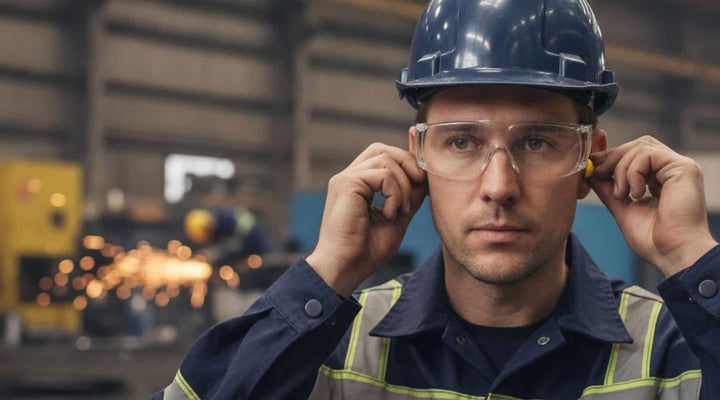
Match the ANSI/ISEA 105 cut scale, A1 to A9, to the actual task: cut-resistant gloves at A4 and up where lacerations would need stitches, A7 to A9 for glass, steel slitting, and blade changes. Add impact-resistant gloves rated under ANSI/ISEA 138, which defines three back-of-hand performance levels with Level 3 the highest. Round out the cell with hearing protection for press lines and chemical-resistant clothing wherever solvents, acids, or coating lines put chemical exposure in the JHA. The distributor's edge is the glove trial: put three candidate models on one shift for two weeks, count the failures, and let the data pick the SKU.
Transportation and warehousing: the roadway is the jobsite
Transportation and warehousing recorded 865 deaths in 2024, and 619 of them were transportation incidents. Truck transportation alone accounted for 577 of the sector's fatalities. Nationally, transportation incidents remain the most frequent fatal event across all industries combined, 1,937 deaths and 38.2 percent of the 2024 total.
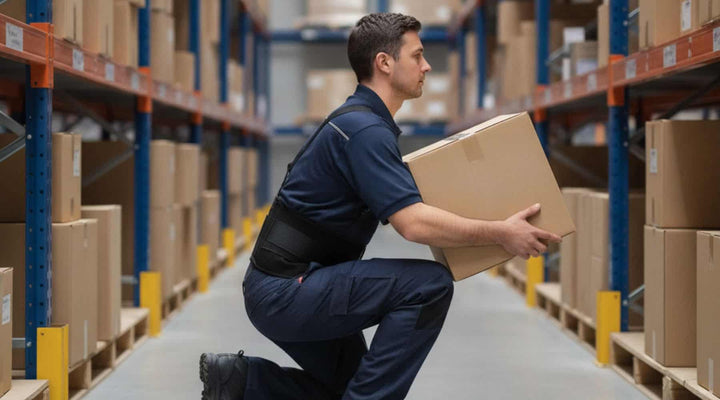
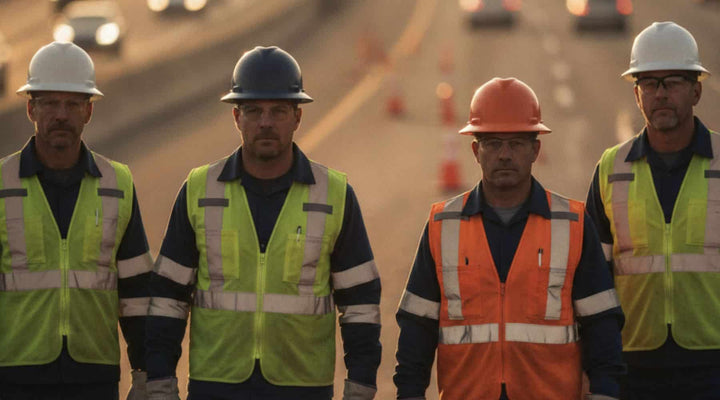
PPE cannot prevent a highway collision, so the program concentrates on the moments workers are outside the cab or on the dock: Class 2 and Class 3 high-visibility apparel from a deep hi-vis products line, safety footwear with traction for fueling islands and wet docks, and ergonomic support for the lifting that fills every trailer. Fleet accounts churn through hi-vis fast. Reflectivity dies long before the fabric fails, so a scheduled replacement cycle sells itself.

The hazards that cut across every industry
Some hazards ignore sector boundaries, and the accounts that face them expect their supplier to know the rules.
Confined space entry. 29 CFR 1910.146 requires a written permit program for permit-required confined spaces in general industry, with atmospheric testing before and during entry and rescue provisions in place. The gear follows the permit: calibrated gas detection, retrieval harnesses and lines, and respiratory protection where testing shows the atmosphere requires it. The permit evaluation, not the catalog, decides the final list.
Electrical work and arc flash. NFPA 70E, the Standard for Electrical Safety in the Workplace, is the reference for protecting workers from shock, electrocution, arc flash, and arc blast. Accounts doing energized work specify arc flash PPE and arc-rated clothing against it, so stock accordingly and route detailed ratings questions to the account's electrical safety program.
Respiratory protection. Under 29 CFR 1910.134, employers must provide suitable respirators wherever they are necessary to protect health, backed by a written program with worksite-specific procedures, fit testing, and medical evaluations. A respirator is a program sale, never a box sale, and the distributor who gets that becomes part of the program.
Emergency preparedness. Eyewash access, first aid supplies, and stocked spill response are the gear nobody prices until the day they need it. Site-ready bundles keep those gaps closed between audits.
The four verticals at a glance
| Industry (2024 CFOI) | Leading Fatal Event (Verified) | Recommended Safety Gear |
|---|---|---|
|
Construction 1,034 deaths |
Falls, slips, and trips (389) |
Personal fall arrest systems (29 CFR 1926.501), Type II helmets with chin straps, Properly fitted PPE (29 CFR 1926.95) |
|
Oil & Gas Extraction 92 deaths |
Transportation incidents (39) Contact incidents (27) |
Flame-resistant (FR) coveralls with reflective striping, Impact-rated gloves, Sealed safety eyewear, Heat-stress protection and cooling support |
|
Manufacturing 353 deaths |
Contact incidents (104) |
ANSI/ISEA 105 cut-resistant gloves (A4–A9), ANSI/ISEA 138 impact-rated gloves, Hearing protection, Chemical-resistant clothing |
|
Transportation & Warehousing 865 deaths |
Transportation incidents (619) |
Class 2–Class 3 high-visibility apparel, Regular replacement cycles for hi-vis gear, Slip-resistant traction footwear, Ergonomic support equipment |
PPE maintenance, inspection, and replacement
Gear that ships and then rots in a gang box protects nobody. NIOSH lists inspection and replacement of damaged or worn-out PPE among the core elements of any PPE program. Build the account's routine around three layers.
- PPE inspection before use. Harness webbing, helmet shells and suspensions, glove palms, and respirator seals get a quick check at the start of every shift. Damaged gear comes out of service on the spot.
- Preventive maintenance on schedule. Suspension liners, earmuff cushions, and lens anti-fog coatings wear out before the product looks worn. Quarterly service swaps beat failure-day replacements.
- Replacement cadence by category. Hi-vis loses reflectivity to sun and washing. Cut gloves lose rating integrity with abrasion. Put dates on the calendar instead of waiting for failures, and the account never fails an audit over a faded vest.
Every layer is recurring revenue for the distributor and lower risk for the client. The same logic applies to the specialty lines in our guide to PPE for niche industries.
What the supplier partnership looks like in practice
Product is the entry ticket. The partnership is everything wrapped around it. Walk the site once a quarter and audit what workers actually wear against the written hazard assessment. Hold stocking depth in the sizes the account really uses, because a fit rule violation is now a citation risk in construction, and a missing 2XL is how it happens.
This is the model we built Caco around. We hold the exclusive license for GE-branded PPE across the Americas and the Caribbean, we secured the first license for WD-40 branded microfiber towels, and we support distributor partners in more than 38 countries.
"A distributor who only ships boxes is a middleman. A distributor who walks the site, checks the ratings, and keeps the shelf stocked is part of the client's safety program. We built this company to be the second kind."
FAQ
1. What is the hierarchy of controls?
It is NIOSH's ranking of five actions for controlling workplace hazards, ordered by effectiveness: elimination, substitution, engineering controls, administrative controls, and PPE. Elimination removes the hazard entirely, so it protects best. PPE comes last because it depends on correct, consistent use by each worker, which is why selection, fit, and inspection matter.
2. What PPE is required for confined space entry?
The entry permit decides. OSHA 29 CFR 1910.146 requires employers to evaluate each permit-required confined space, test the atmosphere before and during entry, and arrange rescue. Typical equipment includes calibrated gas detection, retrieval harnesses and lines, and respiratory protection where atmospheric testing shows it is needed. Always defer to the site's own permit evaluation.
3. What counts as high-performance safety equipment?
Gear rated above the minimum the hazard requires, built to survive the environment it works in. Think ANSI/ISEA 105 cut levels A4 to A9 where blades are present, ANSI/ISEA 138 Level 3 impact protection for pipe and tool work, and Type II helmets where lateral impact is a risk.
4. Which standards should distributors know before selling PPE for the construction industry?
Start with 29 CFR 1926.501 for fall protection, ANSI/ISEA Z89.1 for head protection, ANSI/ISEA 107-2020 for hi-vis apparel, ANSI/ISEA 105 and 138 for hand protection, and OSHA 29 CFR 1926.95, which since January 13, 2025 requires construction PPE to properly fit each worker. The ISEA standards library at safetyequipment.org is the reference we hand new reps.
5. How often should PPE be inspected and replaced?
Inspect before every use, and pull damaged gear immediately. Replacement depends on the category, the environment, and the manufacturer's guidance: hi-vis fades with sun and washing, glove ratings degrade with abrasion, and suspensions wear invisibly. A scheduled cadence beats replace-on-failure every time.
6. How does CACO America support distributor partners in hazardous industries?
With stocked depth across hand, head, eye, hearing, FR, and hi-vis categories, exclusive licensed brands like GE PPE, and account-level guidance on matching ratings to hazards. Explore our safety kits for site-ready bundles.
Ready to go deeper with your hazard-prone accounts?
Talk to CACO America about stocking programs, site assessment support, and the licensed brands that open doors. Bring us the hazard assessment and we will build the product program around it. Contact our team for distributor pricing.