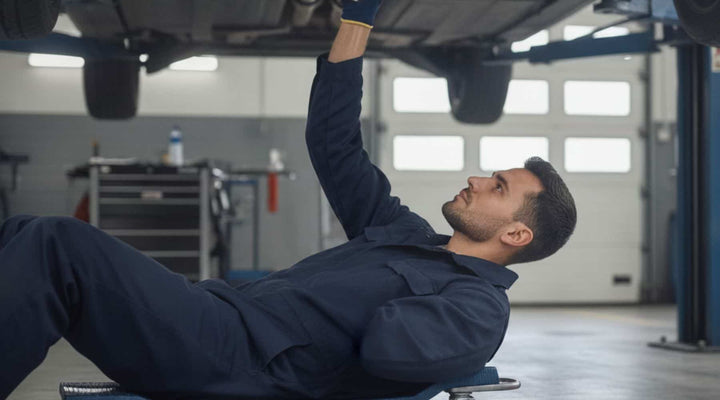
Knee pads are protective cushions worn over the kneecap that spread body weight across a wider area and block point impacts during kneeling work. The right pair depends on the trade: soft gel for flooring and tile, hard cap for concrete and roofing, hinged supports for jobs that mix kneeling with movement. At Caco America, we help distributors stock all of them.
I have spent more than 30 years in this industry. I joined my family's company in 1992, and Caco Abbo Group now holds the exclusive General Electric (GE) PPE license across the Americas and the Caribbean, plus the first WD-40 microfiber towel license, distributing into 38-plus countries. My specialty has always been the untapped category, the product line a distributor's competitors forgot to carry. Knee pads are exactly that kind of line, and this guide covers how to choose them well.
Why kneeling work damages knees
The knee was not built to be a work surface. When a worker kneels, the full upper body load concentrates on the kneecap and the small fluid-filled sac in front of it, the prepatellar bursa. Repeated pressure inflames that sac. Physicians call the result prepatellar bursitis, known informally as housemaid's knee or carpet layer's knee, and the medical literature recommends protective knee pads for anyone who cannot avoid kneeling.
The occupational data is blunt. A NIOSH alert on carpet layers found that these workers make up less than 0.06 percent of the United States workforce yet file 6.2 percent of all workers' compensation claims for traumatic knee injury, a rate 108 times what would be expected, the highest of any occupation. NIOSH documented knee bursitis, fluid buildup requiring aspiration, and skin infections, and it named kneeling itself as a core risk factor. Its recommendation list starts with knee pads.
The four main types of knee pads

Every knee pad on the market falls into one of four broad constructions. Each trades cushioning, durability, and mobility differently, which is why no single pad suits every trade.
Soft gel knee pads
Gel knee pads sandwich a silicone or polymer gel core inside a fabric or neoprene shell. The gel conforms to the kneecap, spreads pressure evenly, and stays comfortable through long kneeling sessions on finished surfaces. Flooring installers and tile setters favor them because the soft, flat face will not dent hardwood, scratch tile, or mark vinyl. Their weakness is abrasion. Drag a gel pad across raw concrete all day and the cover wears through.
Foam knee pads
Foam padding is the simple, economical option: a closed-cell foam block in a fabric sleeve, or a flat insert sized for work pants with knee pad pockets. Foam pads are light, cheap, and easy to hand out by the case, which makes them the default for warehouse crews and general maintenance. They compress over time, so treat them as a consumable that gets replaced on a schedule rather than a durable tool.
Hard cap knee pads
Hard cap knee pads bond a rigid ABS, PVC, or rubber shell over a foam or gel core. The shell shrugs off gravel, rebar tie wire, and rough aggregate, and it lets the wearer pivot and slide without chewing up the pad. Concrete finishers, roofers, and mechanics working on shop floors get the most from them. The trade-off: a hard shell can skate on smooth surfaces and will scratch finished flooring, so keep them off completed work.
Hinged and stabilized knee pads
Hinged knee pads add a jointed frame or stabilizing side supports that move with the leg, so the pad stays centered when the wearer stands, walks, and kneels again. Some designs borrow from ergonomic injury prevention thinking, positioning the load below the kneecap rather than on it. They cost more, but for trades that kneel intermittently all day, the pad that stays in place is the pad that keeps getting worn.
How to choose knee pads by trade

Matching pad to trade comes down to three questions: how hard and abrasive is the surface, how long does the worker stay down, and how much does the job move around. The table below is the shorthand version we walk distributor partners through.
| Trade | Best Knee Pad Type | Why It Fits |
|---|---|---|
| Flooring Installation | Soft Gel, Flat Profile | Cushions extended kneeling while preventing dents or marks on finished flooring surfaces. |
| Tile Setting | Gel or Gel-Foam Hybrid | Contours to the kneecap for comfort on hard mortar beds without scratching tile surfaces. |
| Roofing | Hard Cap with Grip Face | Handles shingle abrasion and provides extra traction on sloped roofs. |
| Concrete Work | Hard Cap over Thick Foam | Rigid shell shields against rough aggregate while thick foam absorbs pressure on concrete. |
| Gardening & Landscaping | Light Foam or Gel Sleeve | Offers lightweight comfort and moisture resistance for soft ground and outdoor tasks. |
| Mechanics | Hard Cap, Low Profile | Protects knees from bolts, tools, and shop debris while allowing easy movement under vehicles. |
| Warehouse & Maintenance | Foam Sleeve or Pocket Insert | Ideal for occasional kneeling with a lightweight, economical, and easy-to-wear design. |
One more distinction worth knowing when a buyer asks. The European norm EN 14404 is the recognized standard for knee protectors used in kneeling work, and you will see it cited on imported pads. It groups protectors into four types and grades penetration resistance by performance level.
| EN 14404 Designation | What It Means |
|---|---|
| Type 1 | Standalone knee pad strapped directly to the leg and worn independently of clothing. |
| Type 2 | Foam or protective insert designed to fit inside the knee pockets of work trousers. |
| Type 3 | Knee protection that is not fastened to the body and is repositioned as the worker moves. |
| Type 4 | Knee protection combined with another function, such as a kneeling frame or support device. |
| Level 0 | Suitable for use on flat ground only. No penetration resistance is claimed. |
| Level 1 | Designed for flat or uneven surfaces with penetration resistance of approximately 100 N. |
| Level 2 | Intended for demanding working conditions with penetration resistance of approximately 250 N. |
Fit and strap comfort decide whether pads get worn

Ask any crew what they hate about knee pads and the answer is the same: the straps pinch behind the knee. A pad cinched tight enough to stay put during walking digs into the soft tissue at the back of the joint, cuts circulation, and comes off by the first break. A pad worn loose slides to the shin. Either way, the worker ends up kneeling bare.
The practical fixes are simple. Look for wide, flat straps that spread pressure instead of thin elastic that cords up. Dual straps, one above the calf muscle and one below the knee, hold position at lower tension than a single strap pulled tight. Slip-buckle and hook-and-loop closures let workers reset tension in seconds. For crews that refuse strapped pads outright, stock trousers with knee pad pockets and Type 2 foam inserts, since a pocket carries the pad with zero strap pressure. Fit logic here mirrors the rest of ergonomic support gear: comfort is not a luxury feature, it is the condition for compliance.
Care and replacement
Knee pads are consumables, and treating them that way prevents the quiet failure where a compressed pad protects nobody. Have crews rinse mud and grit off covers, since trapped grit abrades both the pad and the trousers under it, and let foam dry fully before the next shift. Inspect monthly for the three failure signs: foam that stays dented after thumb pressure, gel bladders that have ruptured or migrated, and cracked shells or frayed straps.
Replacement cadence follows use. A flooring installer kneeling most of every day may need new pads in a few months, while a warehouse picker's pads can last a year or more. The signal is condition, not the calendar. When a worker starts feeling the floor through the pad, its job is over. Pair replacements with the rest of the wear-item cycle, the same rhythm distributors already run for general purpose gloves and other rotating stock.
"Every distributor fights for the glove and boot business, and almost nobody asks the flooring account what they kneel on. Knee pads are the classic overlooked category: small, consumable, reordered forever. The first distributor to put them on the order form usually keeps that line for good." Joel Abbo, CEO, Caco Abbo Group
For distributors: the attachment line hiding in plain sight
Knee pads are one of the highest-percentage attachment products a safety distributor can carry. Every flooring contractor, tile crew, concrete finisher, and maintenance department you already serve has knees on the ground this week, and most are buying pads ad hoc from retail when they buy them at all. Adding a gel, a foam, and a hard cap option to the catalog turns an existing account into a recurring consumable line with almost no new sales effort.
The pitch writes itself from the injury math. Knee disorders drive workers' compensation claims in kneeling trades, and prevention gear is cheap against a single claim, the same logic behind how safety gear protects productivity. Bundle pads with back support belts and hand protection for a full ergonomic package on flooring and construction accounts. Caco America backs the category with distributor pricing across our knee pad range and the branded credibility of our GE PPE line, and our guide to the most in-demand safety products of 2026 shows where the category sits in the wider demand picture.
Frequently asked questions
1. What are the best knee pads for flooring installers?
Soft gel knee pads with a flat, non-marring face are the standard choice for flooring work. The gel spreads pressure across the kneecap during hours of continuous kneeling, and the soft cover will not dent hardwood or scratch vinyl and tile. Look for wide dual straps or pocket-style inserts to avoid pressure behind the knee.
2. What is the difference between gel and foam knee pads?
Gel pads use a conforming silicone or polymer core that shapes to the knee, which makes them more comfortable for long kneeling sessions and more durable under daily use. Foam pads use closed-cell padding that is lighter and cheaper but compresses permanently over time. Gel suits full-time kneeling trades, and foam suits occasional use and bulk issue.
3. Do knee pads help prevent knee bursitis?
Medical references on prepatellar bursitis, the inflammation linked to repeated kneeling, recommend protective knee pads for workers who cannot avoid kneeling, alongside limiting time on the knees. NIOSH likewise lists knee pads first among its recommendations for carpet layers, the occupation with the highest rate of traumatic knee injury claims it studied.
4. How tight should knee pad straps be?
Straps should hold the pad centered over the kneecap without digging into the soft tissue behind the knee. Snug the lower strap first, keep the upper strap looser, and recheck after ten minutes of work. If the wearer feels pinching, tingling, or a cold foot, the straps are too tight or too narrow for the job.
5. How often should work knee pads be replaced?
Replace pads when the cushioning stops rebounding, when gel has ruptured or shifted, or when shells crack or straps fray. Under daily kneeling that can mean every three to six months, while occasional users may get a year or more. Judge by condition: if the wearer can feel the floor through the pad, replace it.
6. What does EN 14404 mean on a knee pad?
EN 14404 is the European standard for knee protectors used in kneeling work. It sorts protectors into four types, from strapped pads to trouser-pocket inserts, and grades them by performance level for surface conditions and penetration resistance. A marking such as Type 2, Level 1 tells a buyer the pad is a pocket insert rated for uneven ground.
7. Can knee pads go in work pants with knee pad pockets?
Yes, if the pad is a flat insert designed for pockets, classified as Type 2 under EN 14404. Pocket inserts eliminate strap pressure entirely, which solves the most common comfort complaint, and the trousers hold the pad in position all shift. Confirm the insert shape matches the trouser pocket, since sizes are not universal.
Stock the category your competitors forgot
Knee pads sit in the same sweet spot as every strong distributor line: proven injury data behind them, steady consumable reorders, and thin competition. If you serve flooring, construction, or maintenance accounts, the demand already exists on your customer list. Browse the full industrial safety catalog at Caco America, or start with our overview of navigating the safety gear market, and put knee protection on your next order form.